Ethics, a threshold, and some high praise

I would like to start out by apologizing for not publishing any posts for the last few days. I have been both very busy and very tired. Yesterday, I spoke with a patient that I had never met before on the phone. I was trying to get his personal information so that I could apply to a few foundations on his behalf. Last October, he was having terrible stomach pain so he came to Penn to figure out what was wrong. The doctor ran some tests and discovered that he had a stage IV cancer diagnosis. The cancer had metastasized to both his liver and his lungs, meaning almost certain death within a year. What troubled this patient the most was the way that he found out that he had cancer. Apparently, the surgeon was extremely blunt when he told the patient, which depressed the him greatly. I was quite saddened by this news. I want to be a surgeon later in my life and I hope that I will be able to use this experience to become a better physician. I will ensure that my time working with desperate patients will stick with me and help shape me into a more well-rounded doctor, who can deliver painful news in the best possible manner. In the end, this patient told me that the surgeon gave him little hope that he would live. He said that every night he goes to bed wondering if he’ll wake up and as a result has begun praying more often. When I called to help him financially, he broke down crying and told me that he thought that I was a sign from God and that I was acting as his messenger on Earth. My offering of help gave him faith that there are people looking out for him, and additional hope that he may be able to overcome the odds and beat his cancer. I was caught off guard and left speechless. All that I could muster out was a thank you. I was unaware of how large the impact my project is having. This patient and other appreciative patients give me the strength to continue trying my hardest and to carry on despite my lack of energy.

Today, I had a discussion about medical ethics with my coworkers. It started when I learned that many doctors have to treat patients even though they may have a rational objection. Trish told me a story of a lung cancer patient that had long hair that began to fall off as he underwent chemotherapy. Once he lost his hair , his doctors, all of whom were Jewish, realized that he had a swastika tattooed on the back of his neck. Nevertheless they gave him the level of care that they gave all of their other patients. I hope that I never encounter a moral dilemma where I have to make a choice like this. As I am not sure if I will have the maturity to make all of the right decisions.

I ate lunch today in CHOP (Children’s Hospital of Pennsylvania) and saw how cheerful and bright everything was. This made me wish that I worked in the adjacent hospital, until Robert, another volunteer, pointed out a sad fact. Where we work, patients are fairly regularly sent to hospice care or simple pass away. This is saddening but often accepted because of their old ages. In CHOP, when a patient dies, this is devastating for both the patient’s family and the medical staff. I do not think that I would be able to handle a month of working in pediatric oncology. This I reaffirmed my belief that I do not want to specialize in pediatric surgery. That field of medicine calls for a stronger willed person than me.

On top of all of that, I passed one milestone and came incredibly close to reaching a second one. Today, I worked my one-hundredth hour and earned $9,500 during that time. To put this in perspective, for every hour that I work, I am essentially raising $95 for patients. That makes this an extremely high paying job, more than 13 times the minimum wage. Hopefully, tomorrow I will pass my goal of raising $10,000 for my patients. My next goal will be to raise $15,000 by March 15th, my last day of work.

-Matt
Let Not..

…a poem i scribbled during a discussion on Friday, March 2nd 

let not war breed hate.

let not ignorance breed injustice.

peace is not just an agreement, it is human connection.

for without empathy we are simply slaves to suffering.

this conflict is a trial is desensitization,

in apathy.

violence is not a social custom, it is a product of

opression.

let us open the gate of understanding and tear down the wall of terror.

Did I Just Learn the Cure for Cancer?

Today was a rather uneventful day. I did contact a number of my patients and found out that most of them had been approved for the grants that I applied for last week. I have helped to raise almost  $6,000, bringing me more than half way to my goal of $10,000. The most significant event of the day was a lecture that I attended. The subject of the speech was nutritional intervention therapy. I hoped that by attending, I could learn some alternative tactics for helping patients battle cancer.

I immediately knew that it would be an interesting meeting because the speaker spent the first fifteen minutes prefacing the lecture by saying that his research is quite controversial. His research supposedly proved that all animal-based products were a major factor in the development and progression of cancer. In one of his tests, he exposed two groups of rats to large amount of a known cancer-causing carcinogen. He then fed one group a 5% protein diet and the other group a 20% protein diet for 100 weeks or about two years. The results are extremely conclusive; all of the rats in the 20% protein group died and none of the rats in the 5% protein group died. When examining the rats’ on a molecular level,  substantial evidence was shown within the first few days. While cancer cells were quickly developing in the doomed group, the other rats were becoming healthier and staying cancer-free. Years later, he tested humans that had different stages of a variety of cancers. His results were almost identical, the less animal-based proteins that were consumed, the better the patient’s outcome was.

This caused him to develop his idea for an unprocessed, whole-food, plant-based diet. To quote the speaker, “casein is the most significant carcinogen that we consume.” Casein makes up 80% of the protein in cow’s milk. This diet is supposed to prevent and/or cure not only cancer but a variety of diseases including both types of diabetes, and heart problems. Now with that being said, I believe that this is completely absurd. The results of his studies were too perfect to be true. Researchers seldom get that conclusive evidence for their thesis. I am not the only person who believes this either. Once I told Trish, she emailed the Penn oncology nutrition specialists and told them about this man’s research. She agreed that the results were most likely not true.

Despite what I and some of the other doctors believe, this raises a few very important questions. What if? What if he is right about everything that he researched? What if I just learned the remedy for some of the worst diseases afflicting humans today? This is obviously worth pondering. The benefits clearly outweigh the almost non-existent risks. In the future, I would like to try to only eating a whole-food, plant-based, not processed diet for a period of time. Who knows what benefits it could have for me and the worst thing that could possibly happen would be that I don’t like the diet and I switch back. That doesn’t seem too bad.

-Matt

Thinking about Death (not morbid)

(Despite the title, this entry is not very morbid; I promise.) Today was an unusually quiet day. Monday is the day where I am the only volunteer and on top of that, Trish had a number of meetings. I spent a majority of my time with two patients but saw six in total. One of the people who I only visited for a brief amount of time had just found out that his cancer was more serious than he had previously anticipated. As a result of learning that he was terminal, he was more anxious than he normally was (His doctor told me that he had a history of anxiety). Trish and I gave recommended him a few different types of counselors and some group therapy sessions. Later on, I saw a different patient and gave her a five wishes from. This form instructs the medical staff what to do if a patient is not able to make educated decisions for themselves. It gives certain trusted family members the power to make decisions about the patient’s future, for example whether or not doctors should try to resuscitate them when they die. This also deals with taking patients off of life support or “pulling the plug”.

This made me think about if I was in my patient’s situation. I am not sure how I would handle receiving the news that I had terminal cancer. I’m pretty sure that I would be anxious too and I would not want to fill out the five wishes form because it would make death seem more immediate, more real. Understanding what my patients are experiencing will be my most difficult task during my senior project by far. Almost every patient is in a similar situation. Every case of Gastrointestinal cancer is serious. There is no stage zero cancer. Even the most optimistic patient must occasionally wonder if at their next appointment, they will be told that the cancer has won. I need to always remember this when I am with patients. They are constantly battling for their lives and simultaneously trying to achieve a state of normalcy. To quote a patient that I saw today, “I just want to get to here (she moved her hand horizontally). I don’t care if it’s up here, down here or somewhere in the middle. I just want to plateau.” That is my job, my only job. To provide raise them money, get them respite vacations and to sit down and talk with them. I just want to get their minds off of cancer and illness and alleviate all of their other problems. I just want to get them “here”.

-Matt

“Somos los Mismos”

Well, it’s officially been one week since I arrived in Barcelona for my senior project! It’s quite incredible to think that I’ve already spent seven days here, completely absorbed in Spanish culture.  How do I even begin to describe all the places I’ve visited, all the things I’ve seen, and all the connections I’ve made? Honestly, I could go on and on, so instead I will try to summarize my experience thus far.

To begin, I -as well as the Westtown group- have visited almost every corner of the city in Barcelona. I’ve learned about the city’s history, seen the cathedral, toured the museum of modern art, and explored a number of the city’s neighborhoods. Tomorrow, we are going to learn about the modern architecture of the city, including the work of Gaudi. Most importantly for me, I’ve witnessed the everyday life and culture of Barcelona. This past weekend, for example, my host’s mother took me out around the city and for lunch I got a taste of Spanish tapas, a classic Spanish dish. They were delicious!

While we were eating, my host mom and I began talking about the differences between the lifestyle of Spain and of the United States. As we noted these differences, we also discussed that, aside from the differences in language and culture, people from the United States are no different from people from Spain. “Somos los mismos” was what my host mom said. In English, this means “we are the same”. Certainly, I’ve heard this idea repeated over and over again in school, but for whatever reason this conversation has stuck with me. Perhaps for me to comprehend this idea it was necessary for me to go away, leaving my homeland entirely and living with a different family. Whatever the reason, my host mother couldn’t have phrased it better. Indeed, my comfort with my host family is a clear indication that, aside from our linguistic and cultural differences, we all share many things in common with one another.

On the days when I haven’t been touring Barcelona and other sites, I’ve been attending classes at AULA. I have to say, things are a bit different from what I expected. After all, when I first arrived, I thought I was going to be able to take art classes such as drawing or photography in school. Contrary to what I thought, there aren’t any art classes at AULA! Students that want to do art have to do it outside of school because there is simply no time in the day for these kinds of classes. As a result, the artistic part of my project will have to be limited to what I do outside of school. I’ve been taking photos with my digital camera, as shown in my last post. I haven’t had enough time to use my film camera yet, but I plan to bring it along for my next visit in the city.

On a final note, the students at AULA are quite kind. This past Friday, we all went out as a class to visit the ruins of Ampurias as well as the small town of Cadaqués. The more time I spend with these students, the more comfortable I’m becoming with speaking Spanish to them. Many people have commented that I speak Spanish really well which has been the quite the confidence booster! Overall, I’m going to miss my host family and the AULA students when we leave for Madrid this coming Monday.

That’s about all for now! I hope to post again soon.

Phoebe

Madrid

We are currently waiting in the train station for our train to Toledo. The three days that we have just spent in Madrid have been so full that they seem to have blurred together into one. The past three days have been filled with lots of introductions: we have met so many beautiful and loving people. Before traveling to Spain I had begun exchanging emails with our church’s Madrid representative, Marina. Marina met us at the airport after our flight from Barcelona. She was wonderfully generous with her time, escorting us to our apartment and organizing a gathering on Saturday with other members of our church to welcome us to Madrid. Marina’s generosity and kindness was inspiring.

In Madrid we saw the Royal Palace and we also sat in on Sunday mass in La Cátedral de Almudena. Both structures were strikingly immense. As we toured the inside of the palace I was struck by the fact that human beings have an amazing ability to create beauty. I was also reminded, as we passed through a room dedicated to the conquest of the Americas, that human beings have a remarkable ability to destroy.

I have spoken a lot of Spanish in the past several days! I have learned, however, that the most important things can be communicated without words. Yesterday we ate lunch with Polina and Olga, both members of our church and both from Russia. Although Polina’s English was very good, that of her mother, Olga, was not. Despite a language barrier we were able to communicate and share with each other about our very different lives. One of the things which I came to appreciate about Polina and Olga was their ability to cope with their isolation. These women live in a city that is incredibly distinct and almost shockingly different from their home in St. Petersburg, Russia. Within Madrid they are surrounded by a different language and culture. While my mom and I are also surrounded by this different language and culture our stay is temporary. Mom and I are experiencing the sensation of being strangers in a strange land by choice. For two weeks we are out of our natural element and for two weeks the exciting sensation of being somewhere foreign is still fresh. Polina and Olga have been living in Spain not for two weeks but for two and a half years. For them the foreignness isn’t temporary: it’s their everyday reality.

-Maggie

Photos – Cadaqués and Barcelona

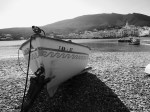
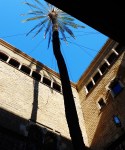
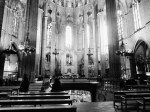
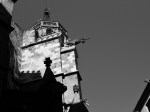
Here are some photos I’ve taken of our visits in Cadaqués and Barcelona. I’ve touched them up a bit and I’m sorry I don’t have more with people!! Thanks to my photo class, I’ve become more focused on taking pictures of my surroundings rather than of people I’m with. Anyway, I will see if I can put up some photos of me and the rest of the group sometime soon. Hope you enjoy!

Phoebe

One Week Down, Three to Go…

Today, I finished my first week of work at HUP. I have never worked a 45 hour week before so this was a very new experience for me. Including travelling on the train and driving to the train station, my actual work week was 55 hours long. I helped to raise $2,500 (I’m on track to meet my goal of $10,000) and I submitted applications for a number of patients so the money should continue to roll in next week. Needless to say, I am quite tired; but I am very happy that I chose to work at Penn for my senior project. It has allowed my to make a more educated decision whether or not I want to go into medicine. This has only reaffirmed my faith that medicine is the career for me. One thing that I realized today is that hospitals never close. I’m sure that as you are reading this, you’re thinking yeah of course hospitals never close. But this never exactly clicked for me until I was leaving at 5:30. As I was walking out of the front door of the hospital with a fair crowd of people, there was another group of people walking in, ready to start their day. There is no mass exodus from the hospital, there will always be a staff of people working there and that thought comforts me. As a doctor, I won’t be the last person in the office and I love that.

I have been regularly attending meetings and conferences as a part of my job. It is very nice because not only will this help me accomplish my goal of learning about the oncological branch of medicine, but there is always great catered food there. I attended one on how to treat VIP patients (fabulously wealth ones), one on hospice care and terminal patients and a few others. I couldn’t believe what I heard at the VIP patient meeting, apparently there are people that come to an outpatient part of the hospital and are surprised that they have to wait at all. Understandably, this can be nerve-wracking for nurses and doctors. But there is another special aspect to these patients. When the pass away, they have the potential to make large donations back to the hospital. This is how new buildings are built and how hospitals grow and develop. The meeting on hospice care amazed me and almost brought me to tears at one point. It discussed whether or not to tell people that they are going to die and the involvement of the family. Some people brought up cases of patients at CHOP as young as three years old. I am sorry that I can’t tell the stories that they told. HIPAA law makes it a federal crime to break patient-doctor (or me) confidentiality. I can not imagine telling the family of a three-year old child that they are going to die so I will not go into pediatrics. People discussed whether or not to tell the child that they were terminal and at what age can children comprehend the concept of death. This brought the reality of dying right in front of my face. It occurs all the time in a hospital and could happen to anyone at any point. I will have to learn to accept this better or this will be a difficult four weeks.

-Matt

In Fante?

Things are starting to become normal in Ghana. We are starting to get into a routine with school and I can assure you that we are all working VERY hard. It seems that everyone’s classes are going well and all of the kids are really warming up to us!

Copp and I had a class that was rather difficult to work with, but today we had a real breakthrough with them. We asked them to start writing their own rap or song and they all handed in beautiful pieces of this amazing poetry. They wrote about their love for soccer and their families and for God and it was really touching to read the words that all of the kids wrote. In our first class, I have grown especially close to a young boy named Solomon. Those that have been to Ghana know that “taking me as a sister” is a very big honor and quite a compliment. Well, Solomon has taken me as his sister and his pen pal. He has asked to see pictures of all of my friends and family. I have taken close to 300 pictures already, so I promise that I will have plenty when I get home. The cutest thing is when kids write notes and hand them to you during class, they get so excited and it is the sweetest thing. There is this amazing girl in one of my classes named Lydia and she has been so helpful. Overall, the kids have been one of the greatest parts of this trip. They are all beautiful and amazing and I will miss every one of them when we leave.

Yesterday, after school, we made cement blocks as part of our service. I don’t like manual labor but making blocks was so much fun! I don’t know if it was because I am in Ghana, but building blocks was great! Some of the boys came over to help us because apparently we were moving too slowly. It was hard work but I actually loved it. After that we took a walk into the village, Ajumako, and we walked into a nice soda bar thing. There was great Ghanaian music playing and Eva, NyAsia and I started dancing. We were immediately sought after by a random guy but then he turned his sights to Rebecca. He proposed to her and she declined but we wouldn’t give up so T. Michael had a conversation with him. It was great fun.

We have been learning a lot of Fante! That is one of my favorite parts. I love learning the language. It is customary in Ghana to take a name based on the day which you were born, long story short, my Fante name is Kosia, it is a lovely name for girls that are born on Sunday! It is so funny because every time you ask someone how to say something, they ask, “In Fante?” It is very funny.

I have grown close to a boy who works in our house named Bright. He is such a nice boy and he deserves a shout out on my blog.

I have to go because a lot of other people want to use the computer, but I hope to tell the rest soon.

Laura, thanks for keeping up, I love you and I miss you a lot :]

Becca and Jordyn, would a facebook message hurt every now and then? :]

Much love,

Jordan

“It’s Complicated”

Day 4

This trip has been intense thus far yes, but everything reached a new high when we approached one of the busiest checkpoints between Israel and the West Bank. Sitting on the bus we were told by our Welsh-born Israeli guide, Lydia, that there are absolutely no pictures at the checkpoint. While we’ve been talking about many serious topics surrounding the conflict this was the first time I felt such an intense sense of urgency in her voice. As we began thinking about it, however, we wondered why documenting these checkpoints is so forbidden. If the Israelis wholly believe that what they are doing is both legal and necessary to the security of the Jewish people why do they feel the need to assure there is no evidence?

The moment we stepped off the bus was the first time I felt truly uncomfortable. Lydia told us the soldiers were just barely okay with letting her bring groups of foreigners into the area to witness the checkpoints and I could so palpably feel the tension. As we stood by the entrance I felt such a strong urge to know each one of their stores in-depth. I wanted to know if the men coming back from their work in construction were heading back to a wife and four children, or an aging father, or a home full of warm and boisterous extended family. I wanted to  know how they felt each time they had to go out of their way and pay extra simply to make their living. Was it worth it for the young male students traveling to get a good education? Would they be able to live their passions or would they be turned away at another checkpoint? To me it seems like such a lack of independence. Melissa told us that ” it all depends on the whim of the Israeli soldier”. How can one person, one young man usually, hold that power over another young man, the only difference between them being that one is Israeli and one is Palestinian? So often one will describe a “security fence” and one will describe a “separation wall” while talking about the same issue. Even between Lydia and Hazam (our Palestinian driver) I can feel the tension of the conflict. They may have sympathies for or a desire to understand the other side but they are still working on either side of the divide. The complexities and intricacies of the view points continue to amaze and overwhelm me.

The more Palestinian faces we see trudging through the checkpoint on their elongated joinery home the less I want to leave. Despite how unwelcome and out-of-place I was I felt as though I could have stayed there simply watching forever. How many families will I see pull out their identification and submit to an occupation before I lose the abilities to see the Israeli side? Similarly, how long might it take for me to see enough possible bombers get caught before I understand the Israeli justification? It seemed impossible last night, but the conflict has only gotten more real as another day goes by. In this reality sits a seemingly vast extent of “It’s complicated”. I cannot think of a better or more frustrating word to describe what I’ve learned, seen, and felt on the beginnings of this trip.

-Cherylyn