“Somos los Mismos”

Well, it’s officially been one week since I arrived in Barcelona for my senior project! It’s quite incredible to think that I’ve already spent seven days here, completely absorbed in Spanish culture.  How do I even begin to describe all the places I’ve visited, all the things I’ve seen, and all the connections I’ve made? Honestly, I could go on and on, so instead I will try to summarize my experience thus far.

To begin, I -as well as the Westtown group- have visited almost every corner of the city in Barcelona. I’ve learned about the city’s history, seen the cathedral, toured the museum of modern art, and explored a number of the city’s neighborhoods. Tomorrow, we are going to learn about the modern architecture of the city, including the work of Gaudi. Most importantly for me, I’ve witnessed the everyday life and culture of Barcelona. This past weekend, for example, my host’s mother took me out around the city and for lunch I got a taste of Spanish tapas, a classic Spanish dish. They were delicious!

While we were eating, my host mom and I began talking about the differences between the lifestyle of Spain and of the United States. As we noted these differences, we also discussed that, aside from the differences in language and culture, people from the United States are no different from people from Spain. “Somos los mismos” was what my host mom said. In English, this means “we are the same”. Certainly, I’ve heard this idea repeated over and over again in school, but for whatever reason this conversation has stuck with me. Perhaps for me to comprehend this idea it was necessary for me to go away, leaving my homeland entirely and living with a different family. Whatever the reason, my host mother couldn’t have phrased it better. Indeed, my comfort with my host family is a clear indication that, aside from our linguistic and cultural differences, we all share many things in common with one another.

On the days when I haven’t been touring Barcelona and other sites, I’ve been attending classes at AULA. I have to say, things are a bit different from what I expected. After all, when I first arrived, I thought I was going to be able to take art classes such as drawing or photography in school. Contrary to what I thought, there aren’t any art classes at AULA! Students that want to do art have to do it outside of school because there is simply no time in the day for these kinds of classes. As a result, the artistic part of my project will have to be limited to what I do outside of school. I’ve been taking photos with my digital camera, as shown in my last post. I haven’t had enough time to use my film camera yet, but I plan to bring it along for my next visit in the city.

On a final note, the students at AULA are quite kind. This past Friday, we all went out as a class to visit the ruins of Ampurias as well as the small town of Cadaqués. The more time I spend with these students, the more comfortable I’m becoming with speaking Spanish to them. Many people have commented that I speak Spanish really well which has been the quite the confidence booster! Overall, I’m going to miss my host family and the AULA students when we leave for Madrid this coming Monday.

That’s about all for now! I hope to post again soon.

Phoebe

Madrid

We are currently waiting in the train station for our train to Toledo. The three days that we have just spent in Madrid have been so full that they seem to have blurred together into one. The past three days have been filled with lots of introductions: we have met so many beautiful and loving people. Before traveling to Spain I had begun exchanging emails with our church’s Madrid representative, Marina. Marina met us at the airport after our flight from Barcelona. She was wonderfully generous with her time, escorting us to our apartment and organizing a gathering on Saturday with other members of our church to welcome us to Madrid. Marina’s generosity and kindness was inspiring.

In Madrid we saw the Royal Palace and we also sat in on Sunday mass in La Cátedral de Almudena. Both structures were strikingly immense. As we toured the inside of the palace I was struck by the fact that human beings have an amazing ability to create beauty. I was also reminded, as we passed through a room dedicated to the conquest of the Americas, that human beings have a remarkable ability to destroy.

I have spoken a lot of Spanish in the past several days! I have learned, however, that the most important things can be communicated without words. Yesterday we ate lunch with Polina and Olga, both members of our church and both from Russia. Although Polina’s English was very good, that of her mother, Olga, was not. Despite a language barrier we were able to communicate and share with each other about our very different lives. One of the things which I came to appreciate about Polina and Olga was their ability to cope with their isolation. These women live in a city that is incredibly distinct and almost shockingly different from their home in St. Petersburg, Russia. Within Madrid they are surrounded by a different language and culture. While my mom and I are also surrounded by this different language and culture our stay is temporary. Mom and I are experiencing the sensation of being strangers in a strange land by choice. For two weeks we are out of our natural element and for two weeks the exciting sensation of being somewhere foreign is still fresh. Polina and Olga have been living in Spain not for two weeks but for two and a half years. For them the foreignness isn’t temporary: it’s their everyday reality.

-Maggie

Photos – Cadaqués and Barcelona

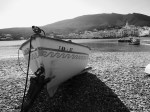
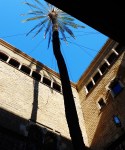
Here are some photos I’ve taken of our visits in Cadaqués and Barcelona. I’ve touched them up a bit and I’m sorry I don’t have more with people!! Thanks to my photo class, I’ve become more focused on taking pictures of my surroundings rather than of people I’m with. Anyway, I will see if I can put up some photos of me and the rest of the group sometime soon. Hope you enjoy!

Phoebe

One Week Down, Three to Go…

Today, I finished my first week of work at HUP. I have never worked a 45 hour week before so this was a very new experience for me. Including travelling on the train and driving to the train station, my actual work week was 55 hours long. I helped to raise $2,500 (I’m on track to meet my goal of $10,000) and I submitted applications for a number of patients so the money should continue to roll in next week. Needless to say, I am quite tired; but I am very happy that I chose to work at Penn for my senior project. It has allowed my to make a more educated decision whether or not I want to go into medicine. This has only reaffirmed my faith that medicine is the career for me. One thing that I realized today is that hospitals never close. I’m sure that as you are reading this, you’re thinking yeah of course hospitals never close. But this never exactly clicked for me until I was leaving at 5:30. As I was walking out of the front door of the hospital with a fair crowd of people, there was another group of people walking in, ready to start their day. There is no mass exodus from the hospital, there will always be a staff of people working there and that thought comforts me. As a doctor, I won’t be the last person in the office and I love that.

I have been regularly attending meetings and conferences as a part of my job. It is very nice because not only will this help me accomplish my goal of learning about the oncological branch of medicine, but there is always great catered food there. I attended one on how to treat VIP patients (fabulously wealth ones), one on hospice care and terminal patients and a few others. I couldn’t believe what I heard at the VIP patient meeting, apparently there are people that come to an outpatient part of the hospital and are surprised that they have to wait at all. Understandably, this can be nerve-wracking for nurses and doctors. But there is another special aspect to these patients. When the pass away, they have the potential to make large donations back to the hospital. This is how new buildings are built and how hospitals grow and develop. The meeting on hospice care amazed me and almost brought me to tears at one point. It discussed whether or not to tell people that they are going to die and the involvement of the family. Some people brought up cases of patients at CHOP as young as three years old. I am sorry that I can’t tell the stories that they told. HIPAA law makes it a federal crime to break patient-doctor (or me) confidentiality. I can not imagine telling the family of a three-year old child that they are going to die so I will not go into pediatrics. People discussed whether or not to tell the child that they were terminal and at what age can children comprehend the concept of death. This brought the reality of dying right in front of my face. It occurs all the time in a hospital and could happen to anyone at any point. I will have to learn to accept this better or this will be a difficult four weeks.

-Matt

Israel vs. The World

Through what I have listened to and seen, I am increasingly aware that Israel, politically, architecturally, and emotionally, is a country of walls. 

Today, I saw a check point for the first time. Most of the wall is not a cement structure; it is a set of three fences separated by obstacles. First, a fence topped with barbed wire, followed by a sand path, a road that is exclusively for security vehicles, more sand, then another two barbed-wire fences. The sand is meant to catch foot prints. They are monitored by video tapes and are mostly flawless. This seems like a high case of paranoia. 

But this paranoia is understandable. In a post-Holocaust society to a population most oppressed by the Holocaust, you would expect a sense of isolation. Isolated doesn’t begin to describe the feelings experienced. I’ve heard horrendous stories of racial oppression towards these people. An Israeli professor expressed to us that he desires a world where a Jewish state is not necessary. But, in his opinion, right now, the Jewish people need a safe place to live. Does that need to be exclusive? I don’t think so, and it doesn’t seem like most of our professors feel that way. He also spoke of his peaceful mother-in-law, a women who hates to see war, but is happiest when Israel is in one. It brings the country together as Jews. So often in Israel, they loose the sense of Jewish unity because of where you come from. 

We’ve been told that Israel considers itself the 51st state of America by some. That deeply disturbs me. Possibly because of the truth, in that so much of our policies are shaped by Israel, but also shape their state of life. 

The Israeli professor was confident in saying that the political mindset was Israel vs. the World. I feel sorry that they feel that way, but sort of understand it. This puts me in yet another conflicting position, what do these walls provide Israel? I certainly don’t support  home demolitions or settlements, and I don’t support a lot of Israel politically. But I support their concerns and desire for a safe land. 

So confused.

-Meg

Introspective

First, I would like to say I haven’t blogged in a day because I was starting to feel very vulnerable about the process I am going through. I am in a very controversial part of the world, studying coexistence in a place where it may seem impossible, and I’m looking at it from angles that many people don’t get to see. The media is in control of how we at home perceive the information, and here, your location and language controls yours (mostly). I realize when talking about this I should choose my words carefully, which is very hard for me to do because I don’t even know what words I want to say, all of my own perceptions are being challenged. The more people I meet the heavier this conflict becomes to me, and that weight is hard for me to hold. Sometimes I don’t even know what I’m holding. 

-Meg

Looking at Equality (or Lack Thereof)

The emotional gravity of the topics we are dealing with is more heavy than I anticipated. The areas of tension can be sparked by something as seemingly small as raising a flag in Jerusalem or in the ancient olive trees. I noticed the extreme contrast in quality of life today, I also noticed the subtle mockeries that can come out. For the first time on the trip, I saw the two different peoples and the inequality that they live in.

For example, we visited a beautiful settlement on the top of a hill in East Jerusalem. It was fenced in with high walls and barbed wire and military means of security. They had many pools, a man-made lake and ancient olive trees at every round-about. This settlement hung their flag high. Points of tension that an outsider might not realize: The pools and lake are a luxury that the Palestinians who lived in a slum bellow couldn’t comprehend. Even the wealthy Palestinians only have access to water a few times a week, and those times when they do, they have to pump a lot to storage to get them through the rest of the week. The olive trees that the Israeli settlers use as decoration, were dug up from Palestinian olive groves. They were their mothers’ trees, and their mothers’ mothers trees, a means by which Palestinian families made their livelihood, now in a round-about as a decorative accent. Finally, the raising of a flag, despite the fact that they are in Palestinian land, is illegal for Palestinians while  Israeli settlers boast their flags high. In a way, not recognizing Palestine at all, claiming that land as their own.

Point of clarity: The building of settlements is ILLEGAL according to international law, and they will continue building regardless of this fact.

Who does the Wall Separate:
-Palestinian students from their university
-Muslims from their mosques
-Palestinians from their career
-Palestinians from their relatives
-Palestinians from their history
-Palestinians from their LIVES

This may seem radical, but the wall is not separating Palestine from Israel. It is separating Palestine from their history.

-Meg

What Have I Gotten Myself Into!

I finally began to realize what my daily life would look life during my Senior Projects. Wake up at 6 am, leave the house at 6:45 before the sun rises, arrive in Philly at 7:50 and begin work immediately, leave work at 5:15, take the 5:29 train home, drive home after the sun has set, arrive home at 6:20 for dinner, go to sleep, then start all over again. Lather, rinse and repeat. This is going to be a long four weeks. I hope that I can make it. During the past three days, I have worked almost 30 hours, spent five hours in transportation between my house and Philly, drank almost 100 fluid ounces of coffee, and helped to raise $1,500 for patients. I am on track to raise (and maybe even surpass) my goal of $10,000. Nevertheless, I am having a great time. This is a teaser of what the life of a resident or doctor is.

Yesterday and today, I met more of the other volunteers that I will be working with. For the most part they are nice and I plan to get along with them all just fine. That is always a good thing. I met with more patients and heard some amazing and terrible stories. One patient was from Liberia and has personally witnessed militant activity. This has left him scarred with post traumatic stress disorder. I also met with a number of people who have no means of income whatsoever and are left to pay outrageously expensive medical bills for their necessary cancer treatment. However, there is always light in the darkness. Despite all of the sadness there is still some humor and some laughter. I saw a small sticker that had a picture of Wile E. Coyote holding a sign that said health tip. It said, “If you can’t afford a doctor, go to an airport – you’ll get a free x-ray and a breast exam and; if you mention Al Qaeda you’ll get a free colonoscopy.” All of the doctors and residents that I have met are always cheery and positive. I am fortunate enough to attend a catered luncheon conference every Wednesday, where all of the interdisciplinary doctors come together are discuss their more difficult patients. They come to an educated decision on the best course of action to take. I am able to learn about cancer and the entire radiation oncological field of medicine. I am also able to meet with surgeons and ask them my questions. One of the patients that I am looking after will be getting a esophagectomy to treat his esophageal cancer. I learned that they stretch the stomach after removing the esophagus. This is really interesting to me but may seem disgusting to you. Sorry.

Today, when I was leaving work I realized how tired I was. I was standing on the train because there were no available seats. I forgot that I wasn’t holding on to anything and as the train began to stop, I began to lose my balance. However, I did not realize that I was falling, so I didn’t catch myself. Then when I was about to fall over, I finally caught myself, but unfortunately I slammed my heel into a small woman’s foot. I apologized profusely and then when she had left, I went to sit down and forgot I was holding a drink. So I spilled my cream soda all over the floor. Ugh. I’m going to need a second spring break after this spring break.

-Matt

Who is Missing?

The eleven hour plane ride passed quickly. Ben and I sat together in the second to last row of a very long plane. His bubbling excitement was contagious. The standard safety protocol demonstration began, and Ben felt moved to applaud the flight attendants jokingly. Movies, sleep, meals and conversation got our 20 person group through the flight. Once we arrived Melissa flocked us through immigration like a mother goose to her 18 little goslings. 

We had gotten our things and gathered in the lobby waiting to hop on the bus that would take us to Orna and Romi’s house. I said hi to Teacher Susan for the first time on the trip. “Have you noticed who is missing?” She asked me.

“Jax and Rosie just left for the bathroom but I think we’re all together.”

“But look around Meg, on a larger scale.”

I looked around the beautiful, modern airport. I saw yarmulkes, I saw Hebrew signs. I felt more than just an absence of the Palestinian population, I felt an active  un-acknowledgment of it. Who is Missing?

At Orna and Romi’s home the conversation was fascinating about the conflict. (Orna and Romi are Israeli friends of John and Melissa’s with a lot of fascinating and powerful stories to tell about the start of Israel and about their desire for peace). I asked their family how present the conflict was in the average Israeli’s life. They said for two years, when serving in the military, as everyone has to do, the conflict is very present. But other than that, now that the terrorism has stopped mostly, the conflict is as visible as each individual desires. You can choose to pay attention. A question that I choose to keep to myself in that moment, was: do Palestinian’s have that privilege too? To ignore the conflict? How present is it to them?

Who is missing?


-Meg

My Adventure Begins

Yesterday, I started my project. I took a 7:17 train from Elwyn to University City and then made the two block walk to HUP. Then I met up with Trish. She was happy to see me after my 6 month hiatus from work. I learned that many things had changed during this time. She was no longer a patient support specialist, she was now a manager and nurse navigator. This gave her more responsibilities but gave her less time to work on each of the many different facets of her job. I also learned that of the patients that I saw during the summer, only a few were still around. I had expected this answer before I asked the question. It is important to remember that the people that I work with are extremely ill. The survival rate is low even with the advanced medicine that Penn has to offer.

We then began to discuss what my job would entail during these four weeks. She said that she wants me to become as knowledgable as possible about this oncological branch of medicine. There are multiple different conferences and educational classes that will be happening during my time working here that Trish and I will be attending. They are all in Philadelphia so it should be no problem attending them. Trish told me that my main job would be to raise as much money as possible for the patients in need. I will also be working on a system that helps the patients continue to get money from foundations after I am gone. This is especially important with Trish’s new more executive job. She will have more responsibilities and will have less time to write grants. There will be other volunteers coming once a week certain days of the weeks and Trish told me that I will taking a leadership role and will be in charge of them.

After we finished our talk, I spent a majority of the day researching the organizations that I will be in contact with. I read through all of the applications and went on the websites to see what patients are eligible for which grants. I did see one patient and presented her with a $50 Wells Fargo Visa Gift Card. I am excited for what is yet to come and the surprises that I will face during this month.

-Matt