“What Is Your Name?”

Originally written Friday March 8, 2013

Heritage Academy

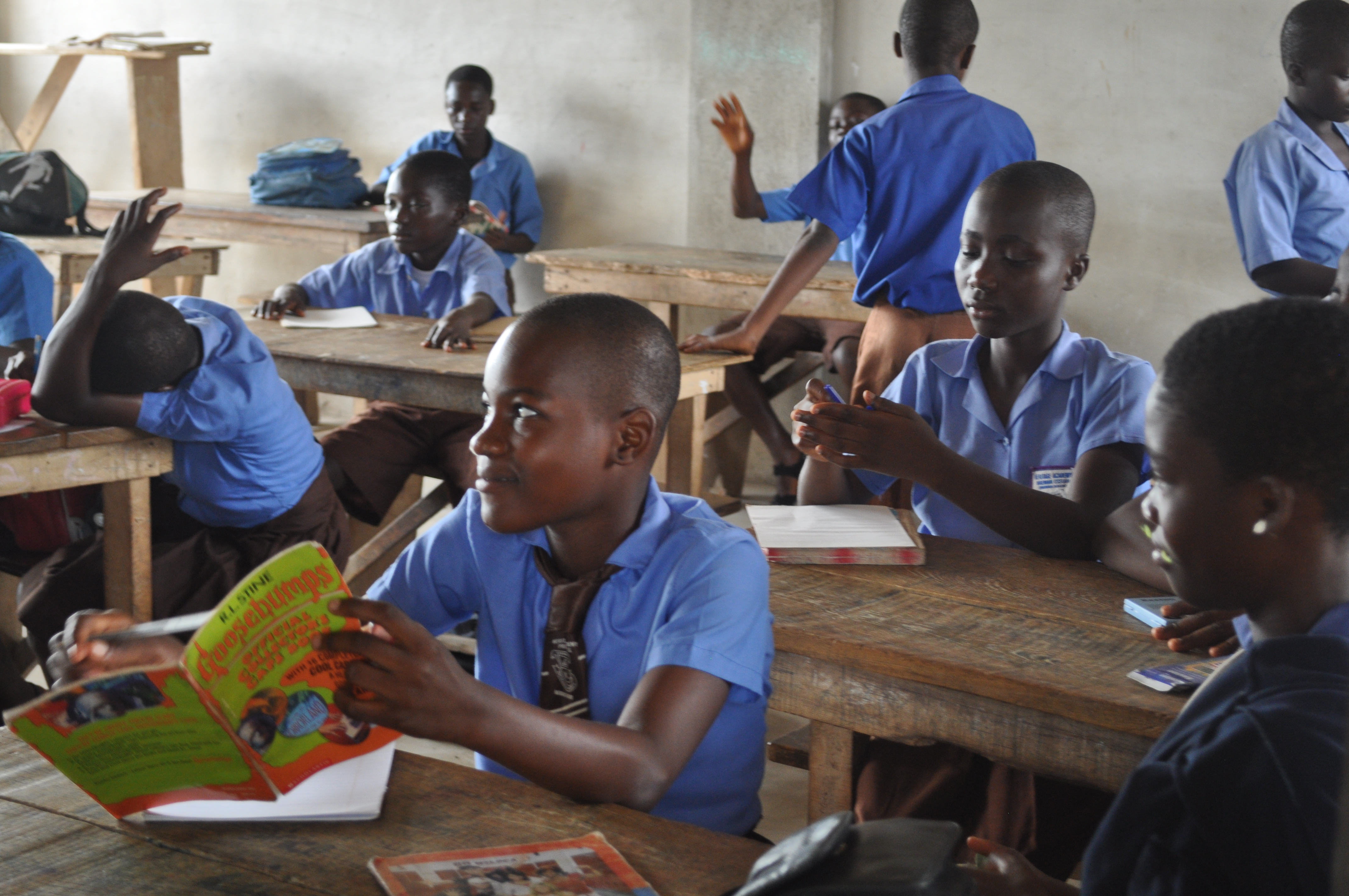
I have never been a more extreme mixture of exhausted and exhilarated. It’s been a whirlwind of a week, full of turbulent planes and culture shock. The first few days in Ghana were mellow, spent growing accustomed to our new surroundings. We visited Heritage Academy briefly and within minutes every one of us had at least four Ghanaian children trailing on our arms, asking “What is your name?” Later we visited the bustling markets of Mankessim. Everywhere we went we were met with stares and exclamations of “Obroni!” (foreigner). In the tight alleys men and women weaved about each other, expertly balancing immense baskets of vegetables on their heads. Almost everyone in our group left with several yards of rich fabric to be tailored into shirts and pants and dresses. Continue reading ““What Is Your Name?””

A Typical Day for Sophie at the Embassy

8:50 a.m- Show up to work early, stand nervously by security guard while he calls what I know to be an empty office, looking for someone to escort me in.

8:55- Still no answer in Cultural Affairs office, because no one has come to work yet.

9:00- A familiar face finally arrives, takes pity on me, and escorts me in.

9:02- Marine exchanges my passport for a red visitor’s pass.

9:10- Arrive in Cultural Affairs office, hang up coat, swivel back and forth in chair waiting for the two interns in the office to get to work.

9:15- Interns arrive late, exchange small talk and a joke or two, discuss previous nights activities.

9:30- Freak out thinking passport is lost, look everywhere for it, then remember the Marine has it.

9:45- Help intern edit daily news report of German media to be circulated to those working in the embassies in Germany, and then back to Washington. Chuckle at expressions and word choice used by native German speakers who write the report in English. 

10:00- Tanya arrives and whisks me off to a presentation. The interns follow.

11:00- Go back to desk, attempt to unlock Tanya’s iPad. She wrote down the passcode on the first day but I lost it and am too ashamed to go back to her office and ask for the seven hundredth time.

11:10- Swallow pride and get passcode from Tanya. Write it down again.

11:30- Talk to interns about their work and lives back home, discuss differences between Germany and America. Continue reading “A Typical Day for Sophie at the Embassy”

Together


IMG_2428


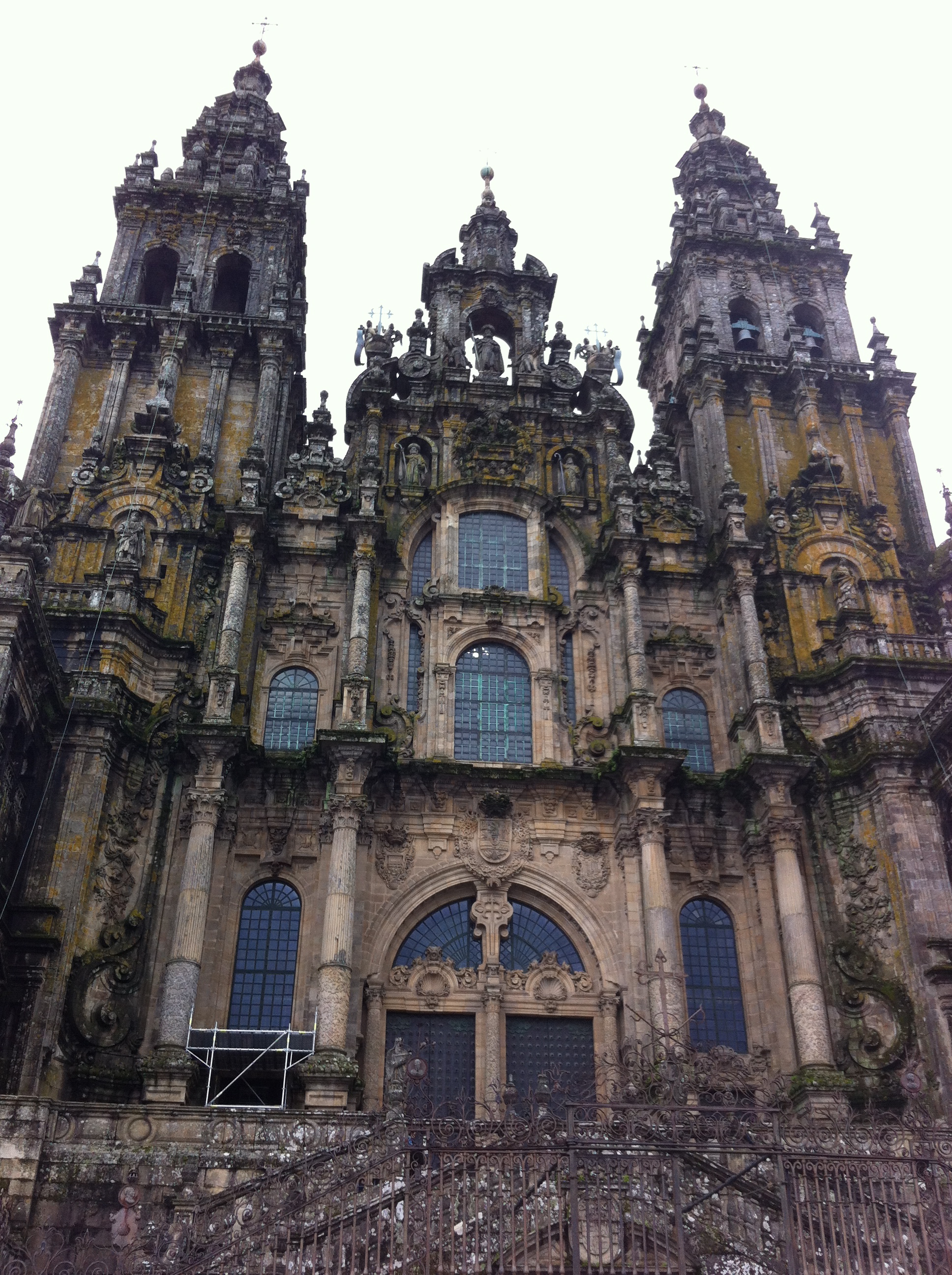
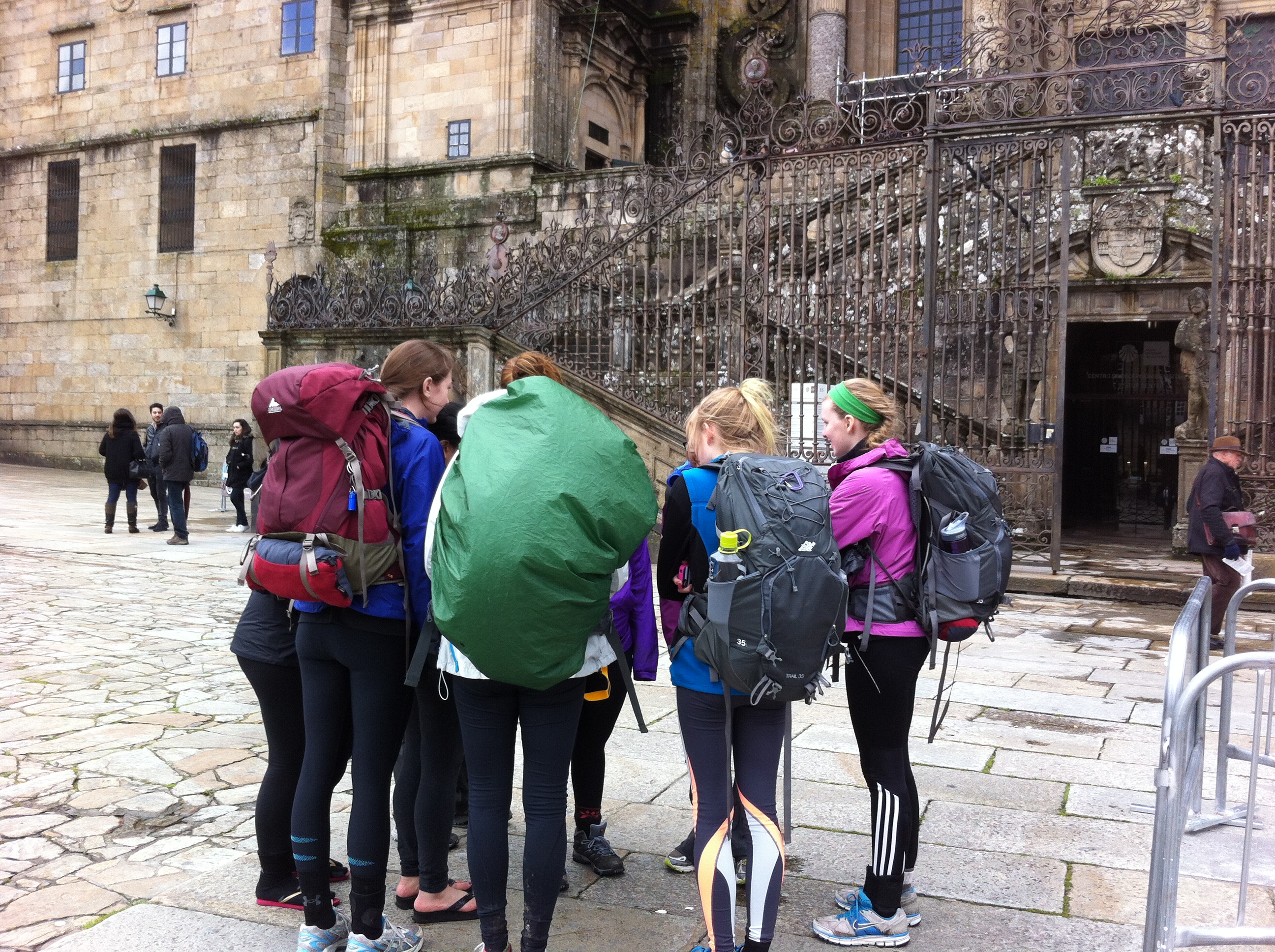
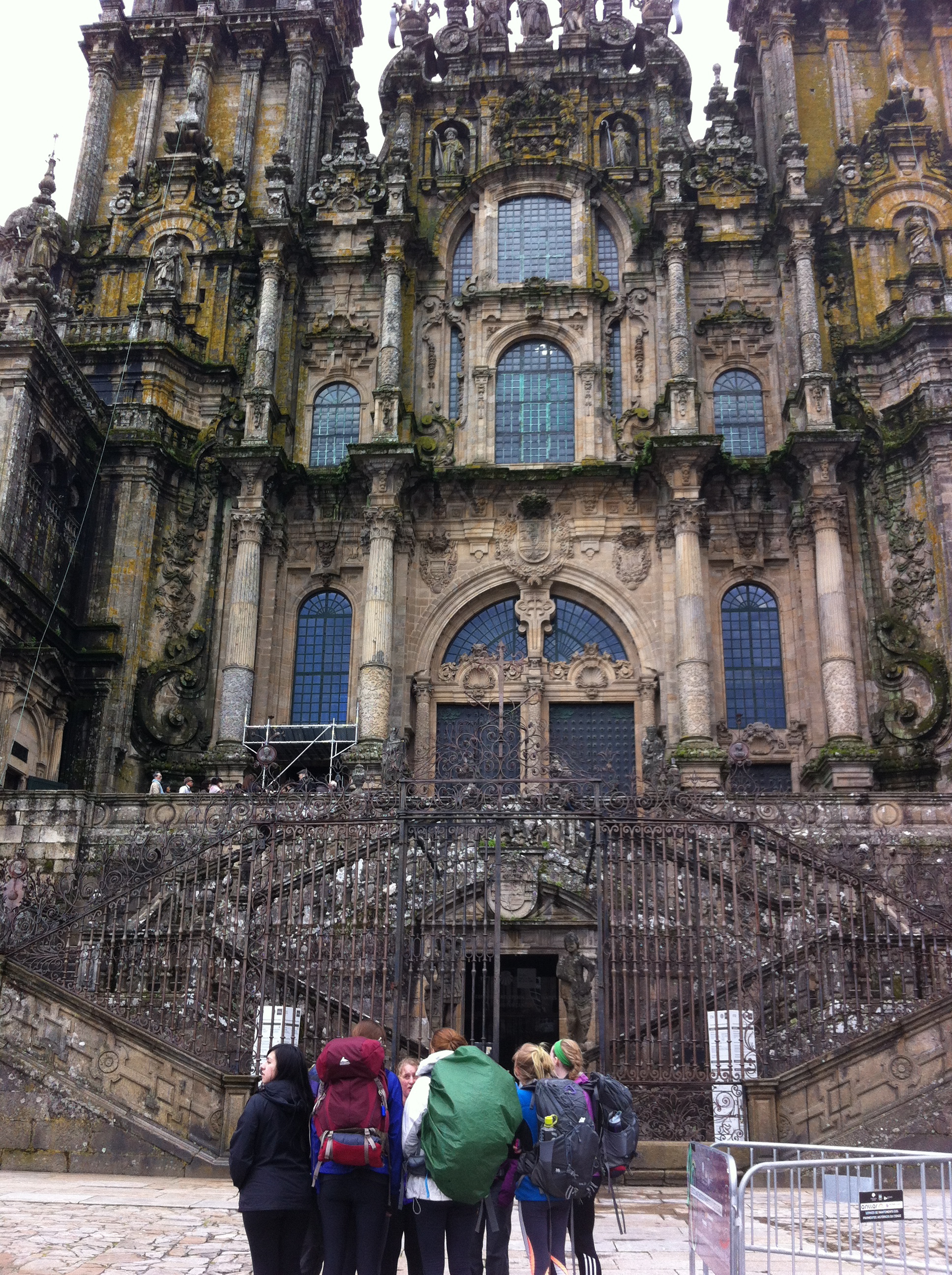
We had decided that on the last day we should enter the Praza de Obradoiro in Santiago and come to face the cathedral together. We designated a street where we would wait for all the peregrinos of our group to gather  as they entered the city. As members of the group rounded the corner to the named location, they were greeted with hugs and hurrahs by those who arrived before them. The street filled with the sounds of congratulatory shouts, laughter and sighs of relief. Once reunited we walked together down the final stretch of the ancient street and into the plaza that faces the cathedral. It was a powerful sight to behold – not just the monstrous gothic cathedral looming over us – but all of us together, some arm in arm, taking the last steps of the Camino as one.  We had arrived. Together.

IMG_2431

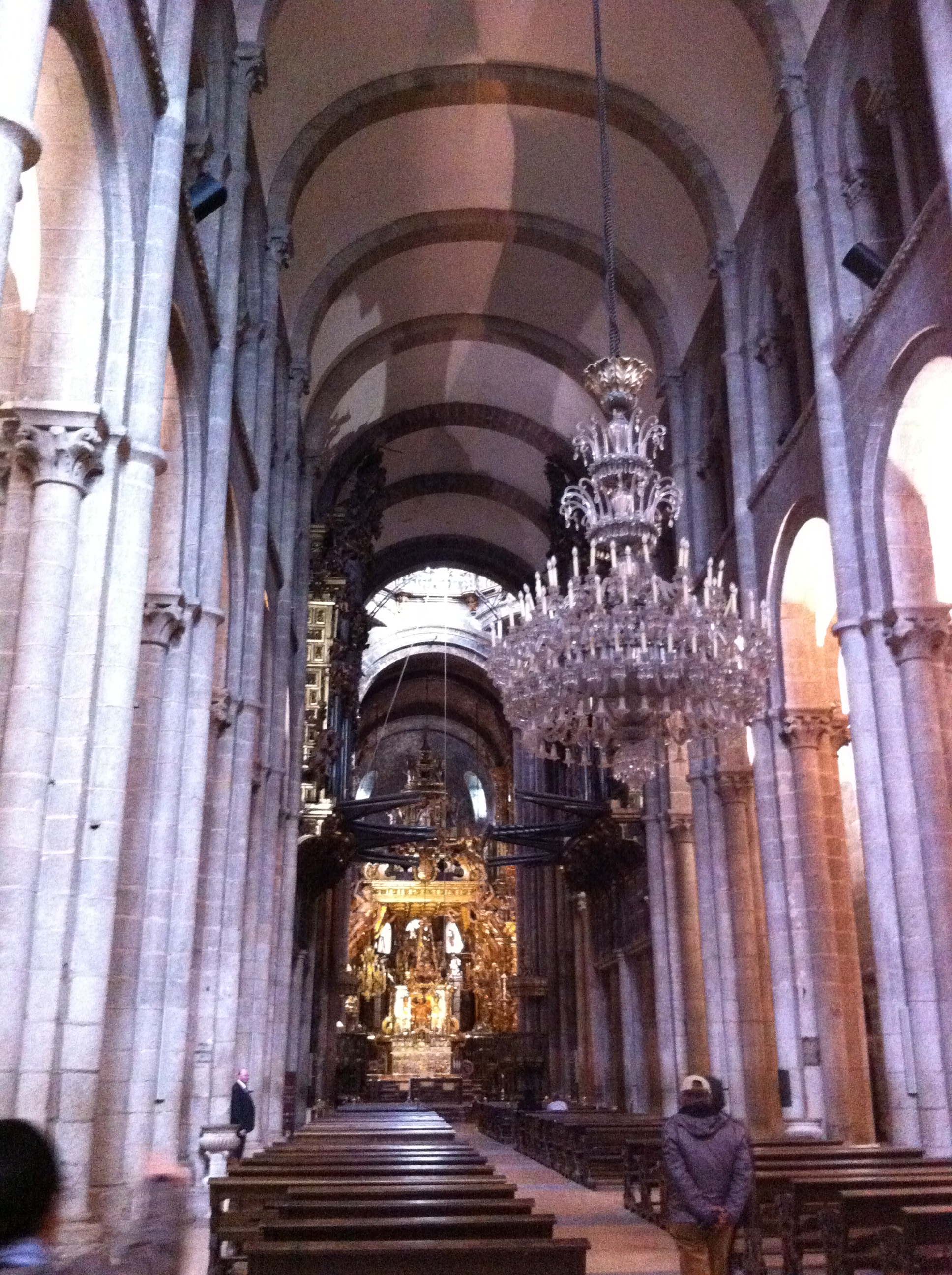
We wobbled and hobbled up the steps of the cathedral to cross the threshold of the edifice that legend says contains the remains St. James the Apostle. The statue of St. James was there inside, waiting for us. Dare I say that most of us, in reality, paid the magnificent shrine to St. James little attention at all. Most did not care in that moment to observe the intricate marble sculptures, the elaborate triptychs, or even the crypt of St. James. We were focused on the fact that the end had finally come, that our weary feet would have to walk no more. We went to the offices of the cathedral to present our pilgrims’ passports and receive our Compostela, the document written in Latin and inscribed with a pilgrim’s name,  that certifies one has completed the Camino. The staffers looked upon us with kindly eyes and granted each of us a compostela. The students squealed as they surveyed their precious documents.

IMG_2434

The Camino de Santiago from Sarria to Santiago de Compostela took 5 days, and we covered a distance of 70 miles. Did I mention the rain? The hail? The wind? The cold? It was a difficult journey.

There weren’t cozy restaurants and taverns to provide respite during the arduous days. Knees, ankles and feet staged revolts against us.  The albergues, public hostels, were primitive but clean, if lacking sufficient heat at night and hot water in the showers. A journey such as this – toward something spiritually significant – should contain elements of sacrifice, though. A pilgrimage is not meant to be a walk in the park. It wasn’t. But it was something better, in spite of – or because of – the hardship. Out of deprivation grow appreciation and thanks.

For me, and I think for all of us – if I dare speak on behalf of others – the Camino de Santiago was an extraordinary experience, one that will never be (can be) forgotten. In between moments of fear, strife and pain a sense of togetherness and connectedness blossomed. We held each other up, urged one another to go on, managed to laugh when laughter seemed impossible. And beneath all that rain, friendships grew. The blisters and swollen ankles will recede in our memories. What we will remember is connection, perseverance and laughter. I am incredibly proud of this resilient, spunky, funny group of students. We did this amazing thing together. 

IMG_2502

Back in the 212

Hey all,

I’m back in NYC and… super jet-lagged! As I sit in my kitchen and look at all the appliances I and the rest of America use on a daily basis, I think of my time in Liberia, where I had none of that. I took a bucket bath everyday, saw or used no fridge while in Goyazu as well as other surrounding villages, and was completely disconnected from the internet, my iPhone and the media all together. So I can proudly say it was a true immersion trip!

And so my journey began here, on March 9th at 7:38pm.

As I sat in Delta’s Terminal 12, I waited to board my plane to Ghana, and then to Liberia. Since entering JFK, I had been surround by many West African men, women and children getting ready to visit home I suppose. Seeing everyone, some in their beautiful and traditional country cloth made me giddy and even more excited to be going to Liberia, where I knew I would see something new with each turn of my head. I could not wait to touch down in Robertsfield, but was also nervous, as I knew this was no vacation, but a trip that would test my endurance, mental capacity and ability to adapt.

Checking in our luggage was a totally new experience. We had a total of 10 bags between the four of us. A backpack each, three duffle bags filled to the brim with school supplies, clothing to give away and our few personal items. We had this extremely large plastic bag, with a zipper to close on the top, that I was sure would break sometime during our day’s walk to Goyazu. We also had another bag filled with files and workbooks for the school children and a HUGE bulky solar powered computer that was for a man named James Yeawolee, who surveys land for the use of sustainable agriculture and farming in Brueyama, a region within Lofa County, Liberia. (A county is the equivalent to a state.) I kept wondering how all of this would make it to Goyazu, a two-day journey, and a day’s walk in the middle of the rainforest…. But I can assure everything made it, carried atop strong heads and a steady arm.

After about 14 hours in my not-so-comfy economy class seat, we landed at Robertsfield International Airport in Robertsfield, Liberia. Actually, let me backtrack, after sitting in front of a man who prayed repeatedly throughout the flight, we landed. Even landing was a totally new experience. As I gazed out the window, I saw clearings where villages had been established. I could see the small adobe huts made of the reddish clay from the earth and zinc or thatched roofs. Was this real, I thought? I had never seen anything like that in my life, besides while flipping through National Geographic magazines or while watching the History Channel.

As I walked down the stairs and off the plane, we entered into the actual airport that is no larger than the size of one terminal. After meeting my grandfather, Papi, we got our luggage from baggage claim, which was in total disarray and quickly left the airport. Me, my brother, mother, father, grandfather, my uncle Daniel and the driver all piled into a car the only seats six, so I squeezed in with my 6 ft 2 dad into one seat and we set off for Monrovia, the capitol of Liberia.

After a couple stops,  (one for Palm Wine, which according to Papi is “From God to Man” and one to meet my uncle David for a quick hello, in his town, “Smell No Taste”) we made it to our guesthouse, ironically named Maryland, in the heart of Monrovia. After a day’s worth of traveling and heat, I want to say I took I nice cold shower, but instead I got my first introduction to bathing and using the bathroom in a country where running water is scarce and expensive. I filled up a bucket with water from the nearby well, sat it down in the tub and experienced my first bucket bath in Liberia. It took twice as long as a normal shower, but felt just as good.

After a dinner of sardines and rice, my mom and I (who shared a room for the duration of the trip) talked excitedly for what was to come and our journey to Goyazu, that would start in just two days. Between the time difference, roosters who crow at all times of the night and morning, howling dogs, street music and loud voices, I did not sleep well, but woke up excited for the day to come!

We shall overcome…

Paris, March 28th, 2013,

Flight US 797 from Tel Aviv landed at Philadelphia at 5:00am on March 16th, 2013, bringing sixteen exhausted and homesick faces home after two weeks away. The flight lasted for twelve hours, eight of which I spent catching up on sleep, the rest spent convincing myself that the past two weeks had really happened. A few days later, on a red-eye from New York to Paris, I spent time on the plane doing the exact same things – sleeping and thinking about my past trip. It felt too strange for me that I can easily jump on a plane at any convenient airport, then fly to different places in the world without being held up because of my nationality – compared to the many stories I’ve heard about how Palestinians have to fly out of Amman, Jordan even though they live very close to Tel Aviv, my life seemed like a different world, and I couldn’t help but feel guilty about that.

The whole trip has felt like a whirlwind, with us waking up at an uninmaginable time even for boarding school students who are used to strict timetable, going out all day, then coming back exhausted and ready to crash to bed. We met with people from all walks of life – rabbis, doctors, professors, land-owners, farmers, housewives – to piece together our own understanding of the conflict. So bear with me while I try to piece together my picture in the next few thousands words, not because I’m trying to be wordy and bore you, but because I myself feel that my grasp on the conflict is not strong enough to describe it in fewer words.

We spent our first week listening to stories from people, and our second week experiencing those stories for ourselves as we lived with local host families in Beit Sahour and Ramallah. The 40-45% umemployment rate in the West Bank meant little until I heard my hostdad in Beit Sahour talked about how he struggled to find a job as an engineer. The refugees’ precarious future barely registered until I saw the children in Al Amari Refugee Camp and realized that they did not have a lot of options for their future. The concerns from Israelis about security also rang louder and clearer in my mind after listening to Lydia Aisenberg, an Israeli freelance journalist, explaining how she got on a bus every day to go to work, and contemplated what seat would be least affected if a suicide bomber was to explode that bus. History and religion also unfolded in front of our eyes as we visited the Old City, walked through the twelve stations that Jesus went to when he was crucified, lined up to see the Dome of the Rock (where an abrasive confrontation between Arab prayers and Jewish people happened the day after we visited, which reminded me that even though we were not in danger, the people here had to live with violence and threats as part of their everyday lives), and saw many churches in Nazareth, where Jesus spent the majority of his youth. Not religious myself, I found these sites fascinating because of their magnificent architecture, the thousands years of history they locked in every brick, and the meaning that they held to many people in the world. The language nerd in me was also awoken when I caught many Bible passages in Latin in different churches and tried to translate them into English, and when I pieced together my little knowledge of Arabic to figure out what a road sign said. Needless to say, the academic experiences I have had in the past two weeks have been comprehensive and unparalleled to any classes at Westtown.

Yet the stories of resistance I’ve heard and seen in the past two weeks also urged me to come back someday and make change. Whether it is to teach children at the Bedouin refugee camp twenty minutes out of Jerusalem, to take care of the kindergarten at Al Amari refugee camp in Ramallah, to work with the Tent of Nations in building a summer camp for local kids, to demonstrate with Rabbis for Human Right against house demolitions, my meager efforts could hopefully support the people’s resistance to injustice, and help solve the immediate problems that hindered the peace process. Many Israelis and Palestinians we talked to have said that they did not believe both governments could come up with a solution within the near future – five or ten years, and that my generation would be responsible for finding a way out. I had no idea how “a way out” would happen, for I left Israel/Palestine feeling more dejected and bewildered than when I first came, but if people who lived with violence and oppression every day could hope for a brighter future, then I can keep my finger crosses for them, too.

But to leave you (and I) on a bright note, let’s end my goodbye post with “We Shall Overcome,” a beautiful, hopeful tune widely known as the protest song in the 1960s Civil Right Movement in the US. In the documentary “Life on the other Side” shown to us in Aida Refugee Camp, a man was playing this song on his violin outside of the Separation Wall to serenade the long line of Palestinians waiting to get through a checkpoint to go to Jerusalem for work. The chorus goes,

We shall overcome
We shall overcome
We shall overcome someday

Just like that violinist, I want to leave you with hope. The situation may not be easy, and solutions may not come  tomorrow, but we know we can hang in there, and “overcome” together. If the incredible stories I have heard from Israelis and Palestinians from all walks of life about how they strived for peace are any indication, there is will and great anticipation that the days ahead can be brighter.

I hope to keep collecting stories from people around me, to follow closely the news from this region, to stay in touch with the friends I made during my time there, and to find a way to come back someday. There is so much about this land that I love and want to understand better. Still, what I have taken away from the past two weeks not only makes me feel closer to the place and sympathize with the people, but also ignites my wish to help solve the problems and change life for the better.

So thank you for having been here for me throughout this journey. I hope I have successfully delivered a tiny part of what I experienced, and urged you to go search for more stories and different truths. Someday, hopefully, we will be able to meet in a peaceful and just land – the land once torn apart by hatred and misunderstanding, but eventually unified with friendship and patience.

Until then,
Thinh.
TourBot 5: IT’S DONE

I know its now past official senior project time and spring break now… but I think I have a legitimate excuse for not finishing TourBot.

I was competing with the Westtown Robotics Team at the Springside Chesnut Hill Regional Event with this robot. We took 2nd.

So back to TourBot…

Last time I posted, TourBot looked like this. I could have called it done and wired it but it would have been ugly. So I took it apart again and broke out the krylon…

WP_20130313_003

After painting everything I put it back together,

WP_20130313_011

admired my work, and started to wire it.

WP_20130313_009

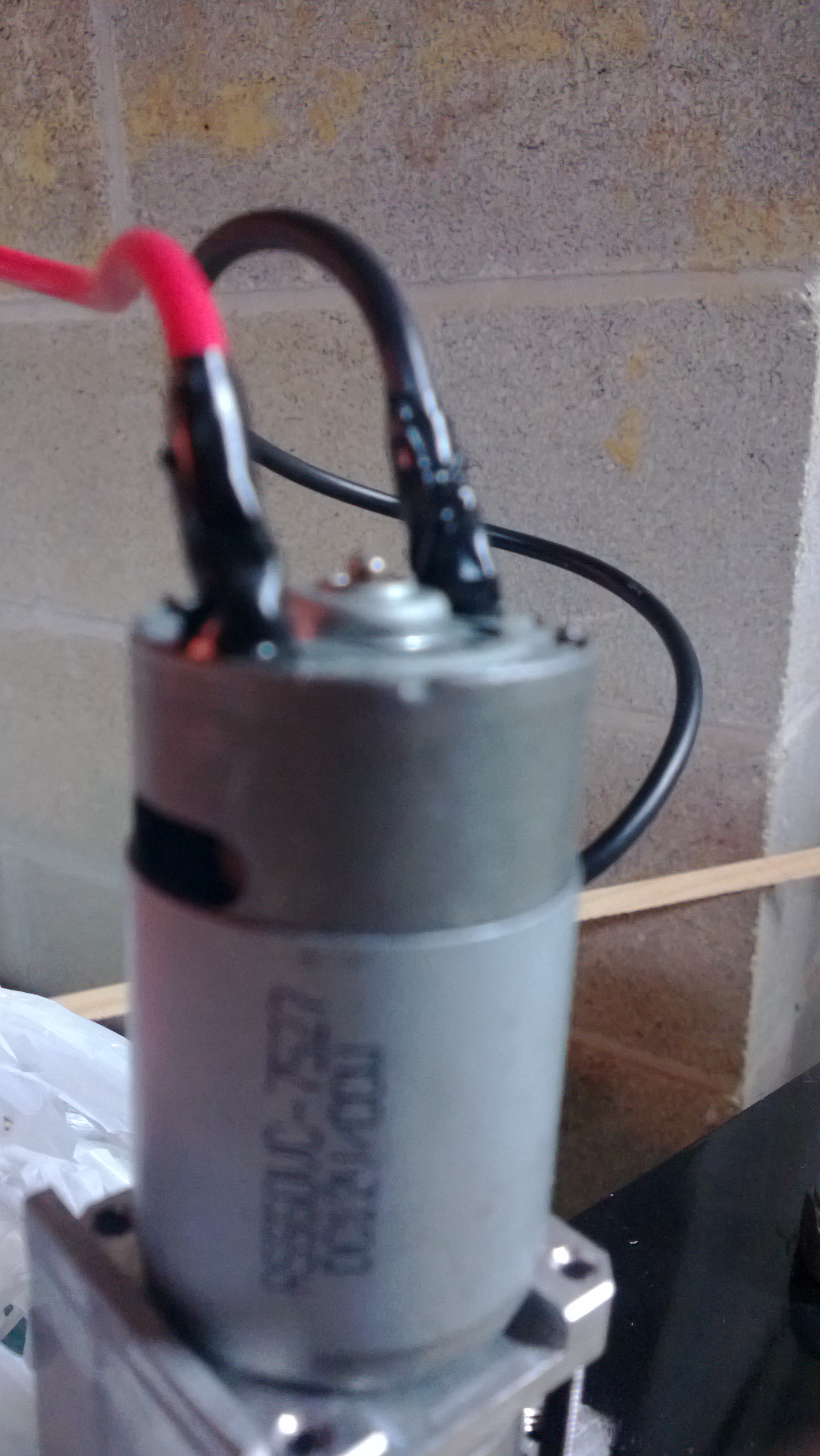
I soldered leads on the motors and connected them to the Speed Controllers and wired them to the battery. I also added a charging port so the robot can be plugged into the wall like a cell phone or laptop to charge the battery.

WP_20130319_008 cropped
yeah.. my wiring job isn’t exactly pretty… I know…

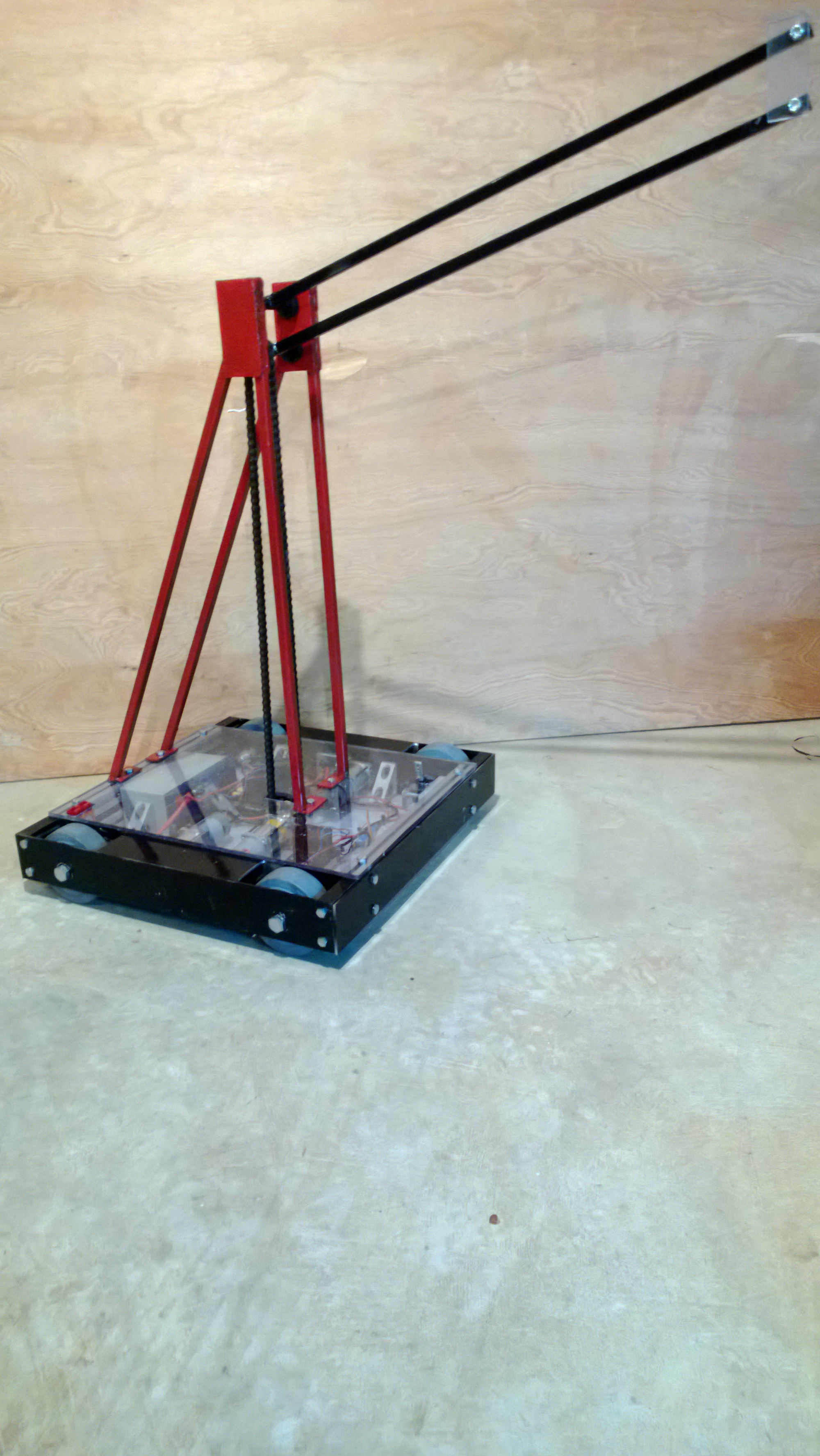
Besides programing TourBot Tourmentor is done.

Enjoy some beauty shots…

WP_20130313_019

WP_20130319_006

I still need the tablet to complete it.

The Pain In Spain

The sun did rise as it’s supposed to on the second day of the Camino, but it was never obvious, obscured as it was by ominous clouds. We set out from Portomarrin at  7:30 in the morning, stopping for a few moments for cafe con leche or orange juice and a small pastry in town. And it was uphill from there. The next few hours were always steadily -and sometimes sharply- up. By the topographical map of the Camino, 15.8 km of our 25 km trek that day was ascendent.

The pain came early on this day because of this constant rise of the trail. Hamstrings  (dubbed stringos de jamon by the students- maybe you had to be there…) were stretched to their limits. Shoes soaked by rain and mud exacerbated the already painful blisters from the day before.  And then there was the rain: the steady, pelting, freezing rain. As we trudged through it I kept thinking about Forrest Gump describing the rain, “We been through every kind of rain there is. Little bitty stingin’ rain and big ol’ fat rain. Rain that flew in sideways. And sometimes rain even seemed to come straight up from underneath.” Yea, Gump rain it was.  I used little things like this to keep my mind busy and to keep myself from getting too discouraged. I’ve been around students long enough to know that stress can be highly contagious.

Continue reading “The Pain In Spain”

Buen Camino

IMG_2364

The first steps on the Camino are toward obtaining the pilgrim’s passport, a document that is stamped along the way to show that you have actually walked to the cathedral in Santiago and not, say,  taken a taxi. Was it a sign that the first church we came upon in Sarria was closed? We’ll see. We wandered through the streets and came upon a convent that answered our ringing of the bell. We purchased our pasaportes de peregrinos and the caretaker carefully impressed the stamp that signified the beginning of our journey.

Our start was a slow one. The students stopped to admire the beautiful vistas and buildings in Sarria, organizing themselves for group photos. In spite of the late start, our packs felt light and spirits were very high.  We were ready for this. Vamos!

IMG_2366

The trail quickly ascended and the rigors of the Camino began to reveal themselves almost immediately. The air became misty. The crisp morning temperatures became more frigid. The physical abilities of each person of also made themselves known. After about an hour, we were not walking as a group, but in small groups with those whose paced matched our own. The Camino is, in one way, how we imagined it would be: surrounded by verdant fields, hugged by medieval villages, traversing lovely forests. It’s also something completely different than any of us could have imagined. Continue reading “Buen Camino”

TourBot 4: Yes I still exist

March 7th 2012

“It should be driveable by tomorrow”

-Alex Horne

Yeah… about that….

I spent the weekend working on helping to get the Metal Moose ready for its competition this coming weekend. So I did not have a lot of time to work on TourBot…

WP_20130307_004

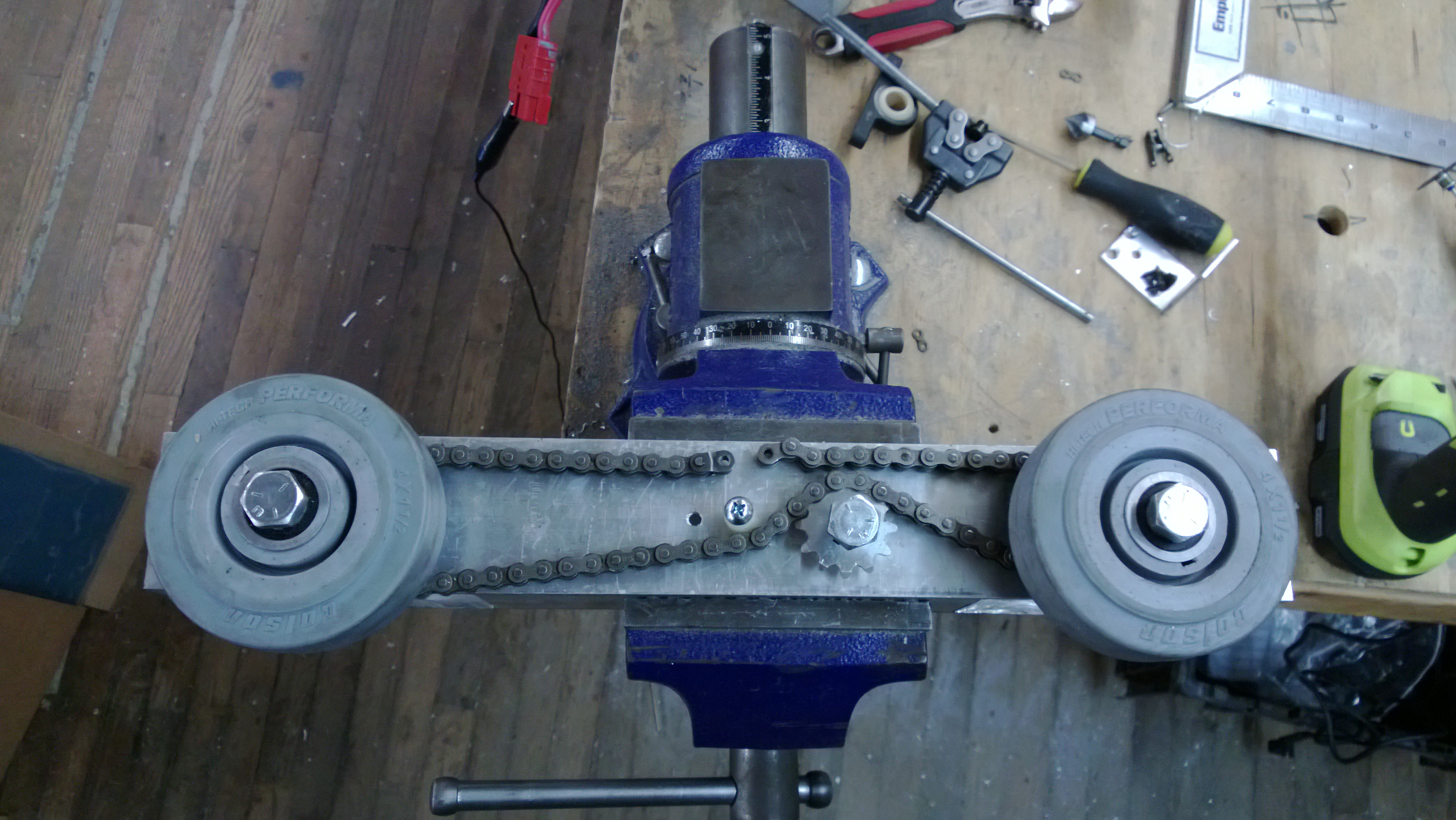
I began by mounting the motors to the drive pods which was as simple as drilling four holes…

When I designed the drivetrain and decided to stick it inside a 2.5″x2.5″ tube I did not take into account the fact that I would have to fit a chain in there…

WP_20130308_006
test wrapping the chain to find the length I needed

It worked fine when I wrapped the chain around the sprockets outside the tube, but that was because I could see what I was doing and reach everything. Continue reading “TourBot 4: Yes I still exist”

Follow that star to Bethlehem

Ramallah, March 10th, 2013

In the Christmas concert of my sophomore year, the choir sang an a capella tune called “Follow that Star,” which told the story of how the three wise men followed the guiding star of Bethlehem to come see the newborn Jesus. The song started with the tenors singing “Follow that star to Bethlehem…” on repeat for four times, the later with higher notes and more urging tune than the previous. It was a lovely song; and even though I could not remember how the rest of it went, “Follow that star to Bethlehem” stuck in my mind. I wondered when I would be able to follow a star to Bethlehem and see the history for myself.

I finally am able to “follow that star” all the way from Jerusalem to Ceasarea to Nazareth to Bethlehem during the past days of my Senior Project. We spent the past two nights with local host families in Beit Sahour, a small town close to Bethlehem, and spent the day visiting different people who wanted to share their perspectives on the conflict with us, as well as seeing religious sites. Continue reading “Follow that star to Bethlehem”