It has been harder than I thought re-adjusting to home and remembering to do things like throw my toilet paper in the toilet and drink tap water. Reflecting on Ghana I realize what an amazing experience it was and how much I have grown from those twenty days. I realized that public speaking is only as scary as you make it and that I can teach and lead a class. I learned about a new culture and made friends that seemed so different at first. I learned how to dance Azonto, eat fish with bones in the dark, play drums, break up middle school disputes, navigate markets, laugh with strangers, sweep with palm fronds, make cinder blocks, pound fufu, enjoy cold showers, wear Ghanaian fabrics, express local customs, think on my feet in class, and barter with market woman who don’t speak my language. The culture of Ghana is so different yet I found so many parallels with home. What I loved about Ghana was the sense of community and joy the villages held. They had chiefs and elders and everyone was responsible for their friends and neighbors. I felt safe and accepted walking through the towns to shop, hangout at the local dance spot, watch soccer, and visit where my kids lived. I have gained new found respect for the amount of effort it takes to live in third world countries and a slight disgust for how unfairly we live with our fancy electronics, kitchens, washing machines, cars, excess food, and clean water. Teaching the kids and seeing how driven they are while experiencing how they live has made me want to help give them the opportunities I have been given. I wish I could sponsor them all, but, I have chosen to sponsor Bernard, one of the many students I fell in love with. I grew closer to my Westtown friends who accompanied me to Ghana and became close with teachers I had never talked to before. In Ghana I learned what it was like and how to handle standing out in the crowd, I experienced the power of religion and a different code of ethics, and I became confident in my ability to handle myself in a new place. I have got the travel bug and I can’t wait to see where it takes me next.
Today was our first morning waking up in our host families’ houses. I roomed with Maddie and we lived with a family of four kids: a boy who was 28 named Javier, a girl named Eliana who was 25, a 16 year old boy named Luis, and a 13 year old boy named Alex. We had a room to ourselves, and a shower with hot water, so we were very happy. The family we lived with was a little shy at first, and it was difficult for me to communicate with them because I hardly speak any Spanish, but Maddie helped me say some things, and I tried to be as polite as possible because it was very generous of them to open their home up to us and cook us three meals a day (which were very good).
Maddie and I woke up early, even without an alarm clock, because Ollantaytambo (the name of the town where we stayed) is bustling by 6:30. We got ready in our work clothes for the first day of service at the local high school, and after breakfast we walked to the school and met up with the group. I loved seeing the mountains on the walk to school. I don’t know how the kids here get any work done; I’d be too busy staring out the window!
Our service project throughout the trip was building a wall at the high school. The trench for the wall was already dug and we were to move cinder blocks and mix cement and do other preparations for the wall. Right inside the school’s gate was a pile of 1,000 cinder blocks and another 1,000 were on their way. When the new shipment was delivered, our whole group made one long assembly line and passed blocks down the line. The people at the end of the line made a new pile, closer to where the wall was actually being built. Some of us were skeptical as to why the blocks weren’t originally delivered closer to the wall trench, but it was easier to just move blocks and not ask questions, because that’s not how they were delivered and they had to be moved anyway. This task of passing cinder blocks down an assembly line seems quite simple but, block by block, the tensions grew, especially when there was a holdup of blocks because someone was struggling with one or because their grip slipped. When instances like this happened, the blocks built up and we were at a standstill. A holdup was usually followed by much yelling and talk of, ‘fixing the system.’ “Come closer!” or “Spread out!” were common cries down the line. Despite many attempts to fix the chinks, eventually there would be more yelling and frustration. I believe that this was more a product of the tediousness of the work rather than the fortitude of the group. After about two hours and 1,000 cinder blocks, however, we were all thrilled to be finished so we could act civilized again, and rest our shaking arms.
After lunch we got to relax a bit and play some team-building games. We were happy to go home that night to shower and veg because it had been a long, tiring day and we wanted to get some good sleep because the next morning we were headed off to Patacancha (a weaving community where we would learn how local weavers spin and dye their yarn, and how they create the beautiful woven things we see sold in the markets). We would even get to do some shopping!
After a quick breakfast with the group we walked all together to the base of the sun temple ruins. We met up with a local guide and he led us up the ruins, explaining Incan history along the way. Every activity we do here seems to involve ‘a short hike up the mountain,’ so I often feel a little winded, but we are trying to avoid altitude sickness as best we can by staying hydrated and drinking coca tea (a tea made of coca leaves that supposedly helps prevent this sickness).
The Inca engineering is incredible. The steps we climbed up were granite rocks about 2’ wide by 4’ deep, and very thick. I can’t completely wrap my head around how these huge rocks were transported. The ancient people harvested them from the top of a neighboring mountain, and then used timber, ramps, animals, and their own physical strength to haul them up to a very high point on the mountain of the sun temple. I wonder how many years and people it took to do this. There is evidence here at the sun temple of the Spanish invasion because some rocks were abandoned on the ramp on the way to the temple. How disappointing it must have been to not be able to finish.
The temple walls are built like a giant puzzle—each fitting into the other with such precision that you could not fit a sheet of paper in-between them. I tried to soak up as much history and knowledge from these people as possible. The architecture here is amazing. We learned that trapezoid-shaped doors and windows are a distinctive feature of Incan architecture and this is an easy way of differentiating ruins.
The placement of these structures also amazes me. The Incans looked at the nature around them and the shapes of the mountain and then built in a way that incorporated the earth. Unlike in today’s society, where we destroy nature and build up our own towers, the Incans embraced nature and trusted its guidance for their architecture. They seemed to have had no problems with landslides, earthquakes, or erosion; after all, mountains have been standing for quite a long time…
As I settled into my peruvian lifestyle, I became very aware that the trip I was on was not meant to make you feel settled (in the best way possible). On Tuesday March 4th, after another great breakfast (the food was always fantastic), we met our host families outside of our hotel rooms, and they helped us carry our things a few blocks away to their homes, which were spread out all over the small town. Our group had been divided into groups of 2 or 3 and each assigned to a family. I was lucky enough to be roommates with Newell! I had become increasingly more nervous to meet the family, mostly because out of all the groups, Newell and I had the least amount of spanish experience; me having none, and Newell being in Spanish 2. Leaving the hotel was completely throwing me out of my comfort zone and I have to admit, I was scared. Babina, my host mother, greeted us with a big kiss on the cheek and Poncho, my host father, a friendly hug. Their house was very cute. Newell and I shared a room with two very comfortable beds. Most of the houses in Ollantaytambo had an outdoor center. In my house, there was an outdoor courtyard with all of the room surrounding it, meaning that all of the doors to each room you had to go outside to enter. I didn’t understand much of what they were saying, so I just smiled and nodded. They sensed how tense I was and offered to play UNO. Once my host siblings, Yessica and Yack came home from school, Newell and I soon learned that UNO was a household favorite. We played for 2 full hours! I wrote in my journal that night, “I am starting to realize that their family is so similar to what we know as a family, along with their traditions. I am beginning to understand the uniqueness of the experience I am having. Even though I cannot understand almost all of what they are saying, to be able to sit and observe is the most influential thing. It is so cool to realize that they are just a small loving family living in this big world, and I already know that I will think of them when I go back home.”
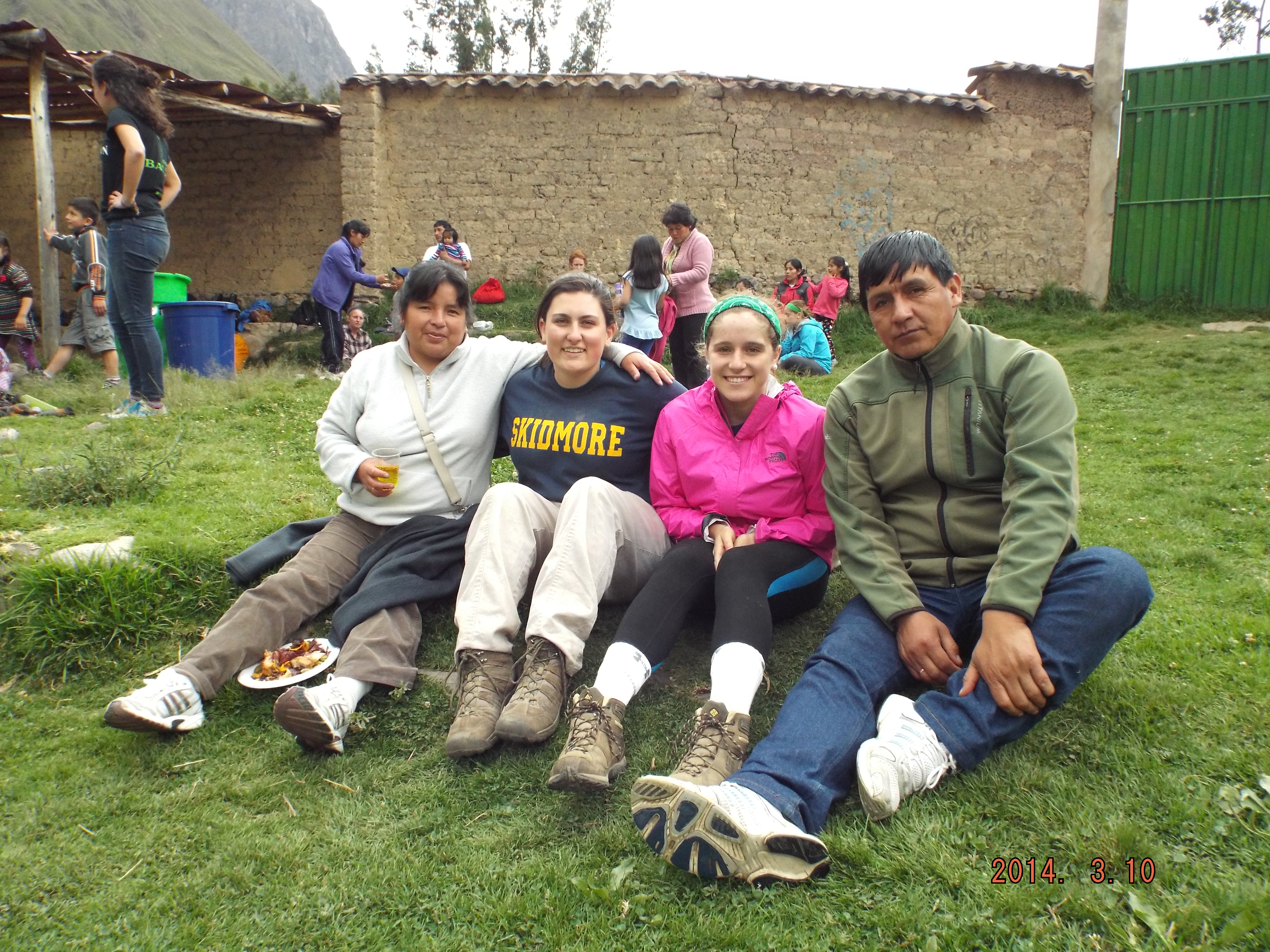
Here is picture of the happy family who, although we had trouble bonding with, grew increasingly more comfortable with and accustomed to living with. I realized over my 6 days with Poncho and Babina, that I never really felt in my comfort zone, but I learned so much about life of the people in Ollantaytambo. The most important thing I took away from them was that people share and spread love all around the world no matter the circumstance, level of education of financial situation. I feel truely bless to be pushed into this opportunity where I would take so much. Even though we were maybe not the greatest match for each other, I am really thankful they were able to open up their home and open up my eyes to their lifestyle.
Over the next few days, we started our service project. It was very exciting! The town of Ollantaytambo had just finished a brand new high school. It was beautiful, and everyone was so excited for the opening day! Our task was to help build a wall on the back side of the school. Over the next couple of days we would unload 1,000 cinder blocks from the back of a truck, move 2,000 cinder blocks from the front of school to the back of the school where the wall was being built, carry dirt, cement, and rocks and get very dirty. It was quite the task. Our group had moments of high tension, laughter, arguments and collaboration. My one wish for the trip would be that we could have made more of an impact on the wall, but unfortunately because of the time consuming labor we didn’t get to see it finished. Overall it was a wonderful experience because we all really came together as a group.
Here is a picture of the first opening day of school on our final day of service! It was so great seeing how excited the kids were to start classes!
The most influential experience over these few days was the Weaving Community. On March 6th, after a long morning of service, we boarded a little bus and took a very bumpy, very scary ride up the side of a mountain to the community. It was incredible. The women were seated, all in traditional dress, working very hard on their pieces. We all gathered and watched them, snapping pictures and listening to our guide explain their lifestyle to us. They used all natural dye’s and carefully spun the llama fur into beautiful yarn. We were each paired up with one of them, and they helped us weave our own bracelets! It was so cool. The woman I worked with was so sweet. I had no idea what she said at all, but I just kept telling her things about our trip and how great things were in english even though I knew she didn’t understand either. She had a great smile and it was great working with her.
After we finished weaving our bracelets, I thanked the woman I was working with and we walked through cluster of houses where they lived. We went inside a house and got to look around. It was then that I realized that what I was seeing was unbelievable poverty. The house was hardly big enough for a few people, and had no furniture. There were no windows or chimneys, and the people often had respiration issues. There was no running water. It was hard to understand and accept that people were living in these conditions. I realized that these women put on their traditional dress and work hard on their beautiful creations for people like me and the rest of the group, who have come to learn about peruvian culture. It surprised me that people with such unique and incredible talents are forced to live in such poverty. But at night, when they go back to their houses, they have to live in these conditions, without a bed, water, or even fresh air. I was truly taken aback, and humbled to have met such simplistic happy people who live with so little, and wish so badly that I single handedly could have helped them in that moment.
Here is a picture of the women, seated, working tirelessly on their wonderful creations.This is a woman stirring a pot of yarn. She has just added the natural dye which she extracted from a plant and is now mixing it into the pot.
A few nights ago, we gathered in a local lodge where a shaman performed a despacho for our group. A despacho is an ancient religious ceremony of the Andeans in which offerings and prayers are made to the apus (mountains) and Pachamama (mother earth).
Before the despacho ceremony itself, Vidal, the shaman, first talked to us. Maria, my colleague on this adventure, is well-trained in performing despachos herself and translated Vidal’s words for the students. Vidal imparted messages about returning to our spiritual selves, about our connection with the earth and our relationship with each other (“todos son Indios” – we are all Indians). He made an interesting play on these Spanish words while he was speaking on this topic: he repeated that we are all “In-Dios, en-Dios” meaning ‘in God’. This is familiar language to me as a Quaker; there is the Light of God in all of us.
Then the ceremony began. A bag of coca leaves was passed. [It should be noted that the coca leaf is part of everything here: it is used to make tea to cure all kinds maladies including altitude sickness, the locals chew it like gum and it is part of sacred ceremony.] Each of us was instructed to find four perfect leaves; ones that were whole, dark green with strong spines. Then each took a small packet containing symbolic ingredients – these would be our gifts.
The Inca believed in the concept of Ayni – that you don’t ask for something without giving in return. Reciprocity. The coca leaves would represent our prayers and wishes and the packets would be our gifts to Pachamama.
One by one the students approached the shaman at his mesita, a small table with a cloth in which to collect our prayers, two cups and other symbolic items. Each was asked to say aloud his or her prayer. Vidal received the leaves, heard the prayer and gave a response, sometimes even a humorous one. I won’t recount what the students asked for, as many were quite personal. Several shed tears. I asked for the happiness of my daughters. I didn’t realize until I stood before him how emotional an experience it would be. He whispered words of encouragement and I returned to my spot in the circle.
Next, we individually brought our small packets to the shaman. He opened them to reveal things like flower petals, spices, leaves – all items that symbolize things like love, happiness, health, prosperity, peace and others. These were the offerings for Pachamama.
Once our prayers and offerings were complete, Vidal gathered up the sides of the cloth to make the prayer bundle and closed the sacred space. We then went outside where a fire had been built over a chakana, an Inca cross-like symbol. We encircled the fire and the shaman recited his prayers and placed the prayer bundle on the fire. Women were given chicha (a corn beverage) to pour on each of the four points of the chakana and the men poured wine in points that represent the three worlds: Hana Pacha, the superior world of the gods; Kay Pacha, the world of existence; and Ucu Pacha, the underworld inhabited by ancestors and spirits of the dead.
At the completion of the ceremony, the shaman bid us farewell. It had grown late in the night and we were spent. But we stayed at the fire to have a Meeting for Worship. We worshiped in silence as the fire crackled and lit our faces. We let the experiences of the day sink in.
It was another in a series of days packed with unforgettable experiences.
The two-hour bus ride from Cusco to Ollantaytambo allowed us to behold the Andes for the first time. Gasps were audible as the kids scrambled for their cameras, elbowed their neighbors, exclaiming, “Look at that!” I felt as if I’d never seen a mountain before these; hills and bumps, maybe, but not a real mountain. The imposing rocks jut sharply toward heaven and are something to be with reckoned with, for sure. Be careful here. But they are also majestic and breathtakingly beautiful. Oddly, they also seem welcoming. Perhaps it’s because they inspire such awe that we feel beckoned unto them.
We stopped along the road to take in the vistas and, I’ll just be honest, to use the bathroom. (Will I never again take a trip without a kid asking to stop to use the potty?) We tumbled off the bus and our relationship with the Andes began. Students sat down to stare at them. A few began to meditate. We hadn’t reached our destination yet and already we felt moved by this extraordinary space on the planet. It made me hunger for knowledge about the people who chose to carve (very literally) a civilization into these monstrous, unforgiving mountains.
Our home for two weeks is the village of Ollantaytambo, perched in small valley where about six craggy peaks meet. This was an Inca stronghold in the Cusco province and the estate of Emperor Pachacuti. It’s an amazing archaeological site and the footprints of the Inca have not been washed away by time. You can see the Inca everywhere, not just in the ruins that surround us, but in the faces of the inhabitants. You can hear the echo of their voices in the local tongue.
We met our representatives from World Leadership School who, on the first day, sent the students on a Global Issues Scavenger Hunt. The kids divided into teams and, without maps, had to find local products, sites or items. How do you do that without a map? How do you find items that you’ve never heard of before, such as a chakana? You ask the locals. It was a clever way to quickly break down barriers to interacting with villagers, to learn the layout of the town together and to simply learn what things are called. The students relished this competition won not by speed, but by quality of their answers.
Yesterday we hiked the massive ruins built on the side of a mountain, arriving at the Sun Temple. To stand in the Temple and survey the expanse around us left us as breathless as the altitude. We saw specks of orange rooftops of our little village below. We saw the mountain we will climb for our trek and overnight camping. We saw the granaries of the Inca built impossibly high, magically high, otherworldly high on an adjacent peak. It’s difficult to comprehend the lives once lived nearly dangling from a precipice.
After our descent from the Sun Temple, we were guided to another sacred space in the ruins. There, we sat in silence to meditate and to journal. It was a profound silence broken only by the sounds of birds and the winds of the past and future.
Hi, I’m Laura, and in about 70 hours I will be boarding a plane to Accra, Ghana. I’ve always loved the idea of sharing something about myself with others so that they can benefit from my experience (however small that may be), and so that’s why I leaped at the opportunity to go teach at Heritage Academy. I’ll be teaching math – surface areas and volumes mostly – ending in a final project in which the students measure our classroom to figure out how much of what materials we would need to build a house or building. I’ve never taught anything before, so I’m definitely nervous about putting myself in front of a class of twenty young students, but I’ll do my best.
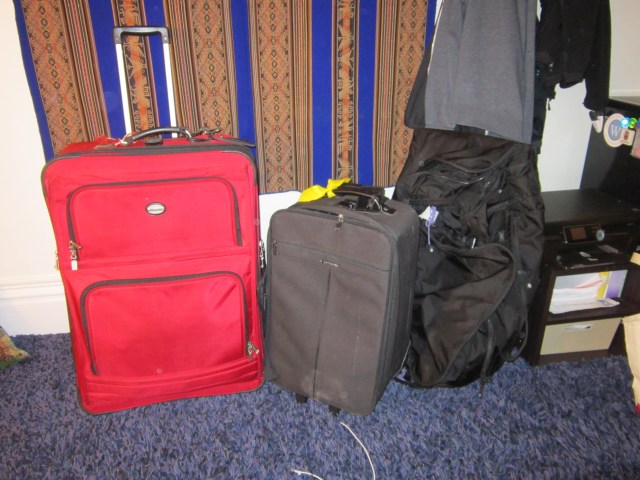
For this blog, I’ll be doing a photo journal, with a picture for each post. So here goes. What I’m taking to Ghana: a camera with an empty memory card, one and a half suitcases full of donations, a few pounds of sunscreen and bug spray, and a few changes of clothes. I can’t wait! Laura
I cannot believe in a few short days I will be in PERU!!!! I am so incredibly excited. In Peru we will be living in the Sacred Valley, learning about culture, living with a host family, doing service and exploring the amazing country! It feels just like yesterday I was sitting in Collection as a freshman listening to all the amazing things the seniors would be doing on their projects, and here I am! It seems so surreal that in just a short 48 hours I will be in the airport starting my journey to South America. I chose this project because of the once-in-a-lifetime opportunity it presents. I have such a desire to learn about different cultures and meet great people from all around the world.
One thing I am so excited for is the “Unplugged Challenge”. This is a rule regarding technology, that’s pretty simple: it’s not allowed. I, too, find myself constantly using my mobile device or in need of a computer. I love the idea that we will spend all two weeks just taking in the beautiful country with nothing but our eyes. Continue reading “Almost Time for Peru!”→
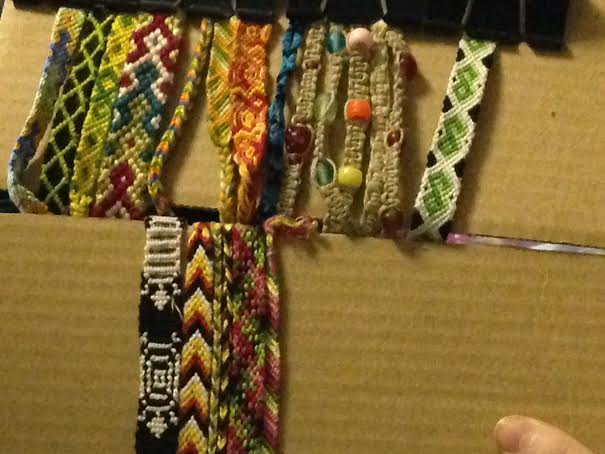
I can’t wait to get out of this snow and leave for Ghana on Friday. I am finishing up my poetry and creative writing lesson plans with Jordan. While packing, Laura found a friendship bracelet making kit and since we both learned to make them at summer camp we are going to bring string and teach our students at Heritage Academy!
Napaykullaki! That’s Quechua for hello. Twenty-two students, my colleague, Maria, and I are about to embark on the first-ever Senior Project to Peru. Westtown has partnered with World Leadership School to provide students with what I am sure will be an extraordinary experience. WLS was chosen because its mission aligns so well with Westtown’s. They specialize in offering hands-on experience in leadership, service and cultural immersion.
We will complete a service project (building a retaining wall at a school), spend time within the school interacting with students, engage in leadership training, meet with local leaders and see many historic sites, not the least of which is Machu Picchu. Continue reading “On Top of the World”→


 Westtown Senior Projects' Blog