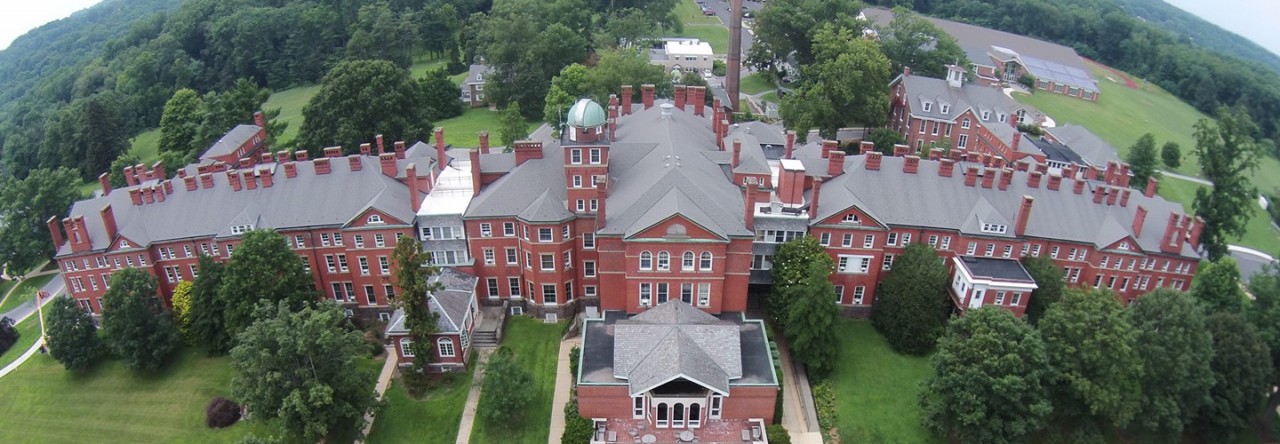
Wow, it’s been a long week! Lab night was a great success, though I learned while work does get done it’s more a social activity than work. But I met a lot of important people in the area, at least when it comes to archaeology, as well as a couple of other teens that have interned with The Foundation in the past, both my age. It’s always cool to meet people your age who have similar interests in common, especially if those things are a bit unusual. Wednesday I had a morning at the office trying to track down a slave named Matilda who was bought by a family named the Robbins who ran a mill in Gloucester in the 1800s. It’s an unusual name for the time period so I’ve had some luck finding a trail, but unfortunately most of it is based on educated guessing rather than solid facts. I’m using Land tax records and property tax records crossed over with the information provided in the Robbins Ledger that I’ve been transcribing. The part that I think everyone including myself have been waiting for came on Thursday. You probably haven’t heard of Toddsbury unless you have lived in Gloucester County, VA. I definitely hadn’t. It’s supposedly the oldest working structure in Gloucester, a house that used to be a huge plantation established in 1652.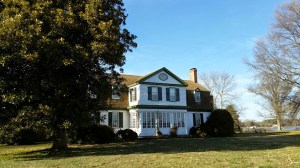 It’s on the banks of the York river on two sides and is absolutely stunning. It’s not often that people get to work on sites like this. Toddsbury, until Thursday, had never had any real archaeology done. The only reason we knew where to look was from a very undefined map drawn up when a brick foundation was discovered while workers were putting in a utility line some fifty years ago. We spent most of the first morning just trying to figure out how we were going to go about setting up Shovel Test Plots (one-by-one foot holes that go down until you reach subsoil, the water table or four feet, whichever comes first= STP.)
  We went around randomly probing the ground in the area we believed to have the foundation struck by the utility workers. Throughout the first day I think our total count of STPs was 65. Thank God we had two volunteers that came down from Minnesota, as well as a girl named Mollie who volunteered with Fairfield last summer. Her family currently owns the house, and has for quite a while. Her grandmother came to visit us and spent lunch Thursday telling us about growing up there in the 1920s. Mollie and I had a lot to talk about as we traded off digging the STPs and shifting through the dirt that came out of the holes looking for artifacts. Funny thing about Mollie was that she almost went to Westtown! Anyway, as she and I sifted through endless piles of dirt finding pounds of brick and oyster shell, along with the more interesting pieces of pottery, rusted nails, and animal bones, Anna Hayden (intern manager and Archaeologist extraordinaire) struck solid brick on her first STP. That was the first of FIVE brick foundations that we found during the course of the day.
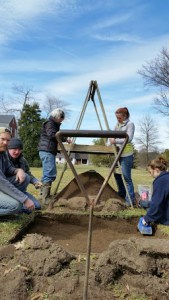 Just to make it clear, FIVE brick foundations in one day happens maybe once on a lifetime, if that. We had no idea the day would be so successful. Thursday we came back and started a test unit, in this case a five by five foot hole which we placed to cover two foundations which were only one foot apart. It was a beautiful and day very successful, and I really hope we can get back there before I leave. Saturday we were suppose to go to Walter Reed’s Birthplace but because of bad rain we canceled, so I ended up lying in bed trying not to move so my muscles wouldn’t hurt. Honestly Archaeologists would make great body builders. You may not think so just watching but try a day on the job and I promise you’ll be in pain by the end. But no pain, no discovery. Today my hosts, The Browns, and I went into Colonial Williamsburg to go see the Oyster Rick that had been built in the Brickyard.
 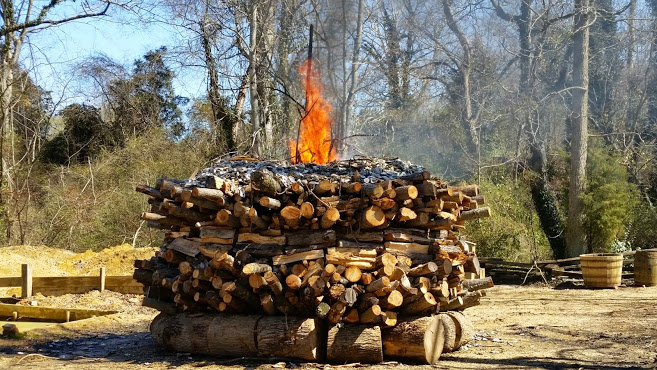 An Oyster Rick is a structure made out of oyster shell and both wet and dry wood. When you light it the Oysters burn and at the right temperature turn into quick lime which is used to make mortar- basically what is used to bind the bricks together- no concrete necessary. Tomorrow it’s back to the office to do more research on Matilda and basically everyone else in Gloucester in 1855 and 1856. Wish me Luck!
Tag: Senior Projects
Days 5-8
Day 5 (Thursday): We woke up early and went on a tour around Cape Town with the Sun Valley 5th graders. It was a fun and very relaxed morning. We got to see lots of different places in Cape Town, we visited a park, a beach, and a little waterside town. Getting to know the 5th graders was very fun; they are all very happy and upbeat children. It reminded me of what it was like to be that small wishing I could be older. When we finished with the tour we said goodbye to our new friends and went to another beach to learn how to body board! It was really fun, not everyone wanted to do it but five of us did and it was a blast. We had to have wetsuits because the water gets so cold this time of year but we couldn’t feel it at all. Learning to body board was incredibly difficult, but some of the teachers from Sun Valley had come and were helping to teach us. They were fantastic. After surfing we headed back to the B & B and to get ready for dinner. We went to a nice little local restaurant and had burgers, while listening to live music, which was really good I might add.
Day 6 (Friday): Today was a day that Kwesi had been waiting for all trip. We went to Robben Island where Mandela and other political threats were held in prison during Apartheid. Before we went though, we hung around the waterfront and got to try lots of different meats like impala, ostrich, and zebra. They were all delicious and tasted like like different types of chicken. When we finished our lunch we boarded the boat to Robben Island.
Once on Robben Island, we had a tour on a bus given by a very entertaining guide who was able to keep the mood light despite the heaviness of what we were looking at. After the bus tour we were given another tour of the actual prison by someone who had been imprisoned their himself. Because this tour was given by a previous prisoner it made it very real, and felt authentic, like history itself was standing in front of us. On the way back from the Island a few of us decided to stand on the front of the boat and watch as we approached Capetown, that is until we got splashed by huge waves. For dinner we went to Sun Valley where they were having a cookout and a camp out for their elementary students. We got to play soccer, and hang out with our little 5th graders again, it was really fun and a nice way to end a somewhat serious day.
Day 7 (Saturday): We left the bed and breakfast to move into our second location, the team house. It’s a beautiful building along the beach with very nice rooms and delicious food. It would fall somewhere between a hotel and a hostel. After unpacking we went out to a tourist market which had really great prices and got some more souvenir shopping in. When we finished and got back to the house had dinner and went for a nice sunset walk on the beach to end the day. The sunset was gorgeous and the beach was full of people walking their dogs.
Day 8 (Sunday): today was our last day of touristy type things before we start service, the real reason we’re here! We started our day of at Kristenbosch Botanical Gardens walking around, it was a beautiful sight and there was so much to see. Then we had lunch at a restaurant in the gardens called Moyo. Moyo had lots of delicious food, which was perfect because they had a all-you-can-eat buffet. They also had really cool singers who sang traditional African music to each individual table. Once lunch was finished we headed to our final destination which was Table Mountain. We rode up to the top in a cable car and saw amazing views of Cape Town from above, the view even stretched as far as Robben Island on one side of the mountain there was a cloud spilling over onto us as we walked around ruining our view but giving us a nice little mist. It was really cool. When we finished at Table Mountain we went back to the house for dinner and a relaxing evening. The kids also took a 10 minute walk to a local pizza restaurant to check out some more local food and have a late night snack to end the night.
~Caroline
Sunday food and fun
Everyone has very happy tummies this evening. Our day started with bread, peanut butter, nutella, croissants, coffee, yogurt, cereal, fruit and a random large bowl of shredded cheese.
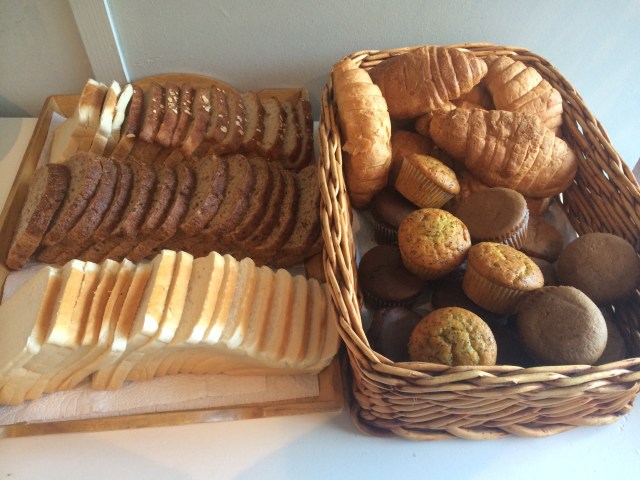
For lunch we ate at Moyo Restaurant in the Kristenbosch National Botanical Garden. It was buffet style and AMAZING. lt reminded me of a cross between Indian/northern African and just straight up yumminess–lamb, sweet potato soup, couscous, salad, the best rolls I’ve ever had, chicken, kebob with chicken, beef or antelope.

And a tasty dessert selection.

My choices included an incredibly rich and smooth chocolate mousse, the most moist orange cake with possible pistachio bits on top and the most incredible cheese cake with passion fruit something or other on top. In-cred-ible.

Then there was entertainment! A trio came around and sang to us in Xhosa (a clicking language). (Pics coming from other camera).
And THEN! Some of us had our faces painted!

Afterwards, we went to the top of Table Mountain in a cable car! (pics coming from other camera).
We arrived back at Team House to yet another delicious meal, salad, rice with vegetables and an incredible sauce of some sort that I need to get the recipe for!
We’ve just wrapped up evening debriefing to prepare us for our service work that begins tomorrow. Yay!
Nighty, night.
T. Melissa
Reflecting
The effects of the apartheid government system are still very much present in the everyday experience of South Africa. Though the government and citizens take steps to change it and have made lots of progress in the last 20 years, it is very hard to change systematic oppression quickly, because it affects the mindset of those living through it so much.
One thing I have noticed and greatly appreciate here is the fact that most of the people we have talked to and interacted with do not shy away from the apartheid. They accept it as a part of their history and acknowledge the progress they have made as well as how much farther they have to go. I find this refreshing because I feel like back home in the States we don’t acknowledge our history as openly as we should.
When we walked around and took tours of the different townships, it made me rethink a lot about how I view myself and how I view those around me. As well as how I view myself and others in the world. I learned that dreams are what carry you through life, and without them you get into trouble and make mistakes. Walking through and seeing people living in so much poverty made me extremely sad, and somewhat guilty because I’ve only ever known a life of privilege. But as I saw people who had accepted their situation as their present not their future and were happy, heard stories of those who had dreams and aspirations, and because of this were doing well, and learned how close these communities can actually be, I began to realize that feeling guilty or sad isn’t going to change anything. They have to accept their present situation and so do I.
Seeing all this poverty has completely opened my eyes and I saw a different part of the world, which is helping me to see a different part of humanity and myself. I’m beginning to learn many incredible things about myself and those I’m visiting and I couldn’t be more grateful for the experience so far. South Africa is an amazing country for many reasons, one of them being the fact that poverty and wealth live side by side literally, to see this in person is incredible. You can’t understand it until you are here.
~Caroline
Day 6 in Vatican City, Day 7 in Pompeii and Conclusion
In the last few days, we visited a variety of wonderful places such as Vatican City and Pompeii. (I was originally inspired to write a paragraph on our exhausting yet rewarding visit to Vatican City. However, I found that T. Ted have already wonderfully summarized our experience in a detailed and lively manner.)
- Ted described the day when we visited Vatican City as follows:
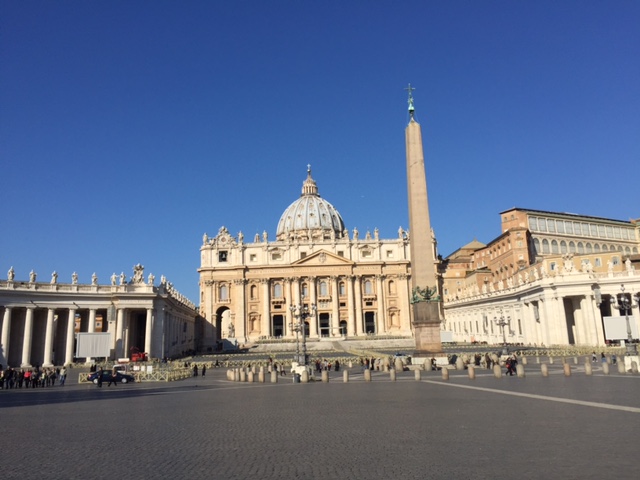
“We had a very tiring, but also exhilarating day at the Vatican yesterday. We first spent some time in St. Peter’s Square before we headed into the Basilica. There are no words to accurately describe being in St. Peter’s Basilica. It is truly an awe-inspiring experience. The artistry and grandeur of the place leaves one breathless. To think of the devotion and faith that led people to create such a thing boggles the mind. We then made our way to the Vatican Museum. Once again, students were able to see one masterpiece after another—Michelangelo, Raphael, ancient sculptures, intricate tapestries—we saw them all. The culminating experience of the Vatican Museum is the Sistine Chapel. One could spend hours there scrutinizing the nuances of Michelangelo’s depictions from scripture. When we left the museum, there seemed to be a shocked silence that fell over the group. We were all physically exhausted from having walked so much, but it is equally mentally exhausting to take in so much beauty and splendor.”
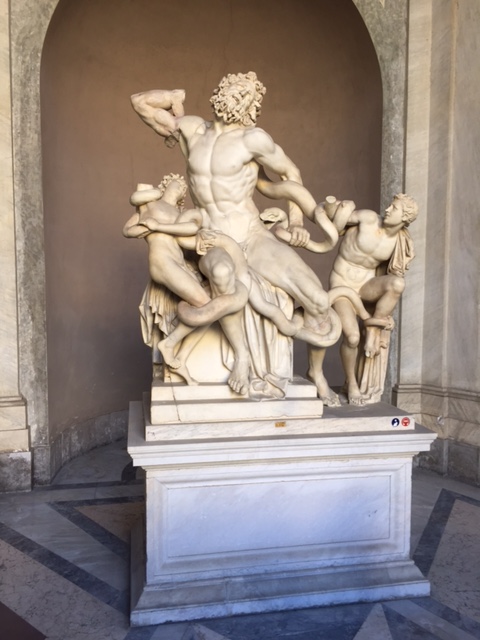
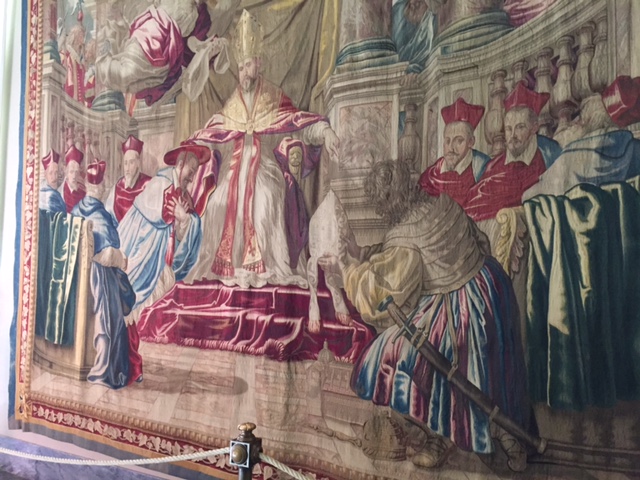
The last day of our Italy Trip started with our transfer from Rome to Pompeii. Waving goodbye to the vibrant city Rome, we left with amazing memories and anticipation to another ancient city, Pompeii. Despite the three-hour ride, everyone felt energetic and ready to explore the stories once happened in the city of Pompeii, an ancient Roman town-city near modern Naples. The city was destroyed and covered with ash and pumice as Mount Vesuvius erupted in 79 AD. We met an awesome Italian tour guide; as a third-generation tour guide, he impressed everyone with his humor and charisma, giving us an unexpectedly intriguing introduction of Pompeii. Through his introduction, we acknowledged the connection between ancient Roman Empire and the current United States such as the eagle symbol, the architectures, and the usage of Latin texts. We were surprised to know that this roman city could survive for a while because of food, wine and sanitation. The explicit expression of sexual needs in Pompeii can be seen from the paintings and carved decorations in the prostitutes’ houses. We did our last Latin translation at the very end of this tour. From reading the passage, we had a peek of the historical events happened to Pompeii and the destruction of the town left by the eruption of a nearby volcano. During this trip, we walked and laughed, exhausted but still felt satisfied. As this trip is about to end soon, we again feel appreciated to have a chance immersing ourselves to a Latin culture and witnessing the masterpieces left in this country.
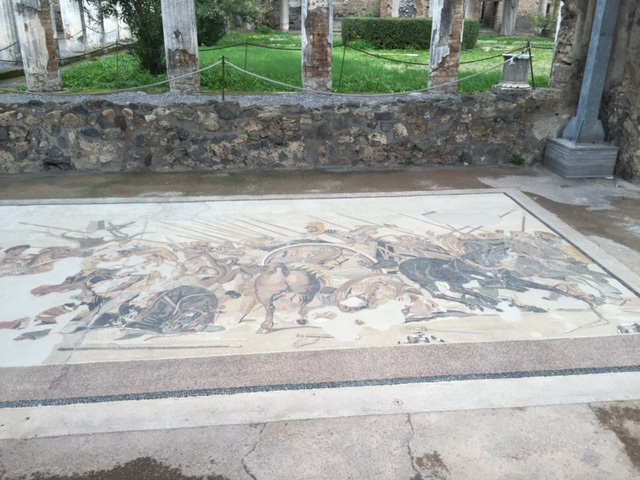
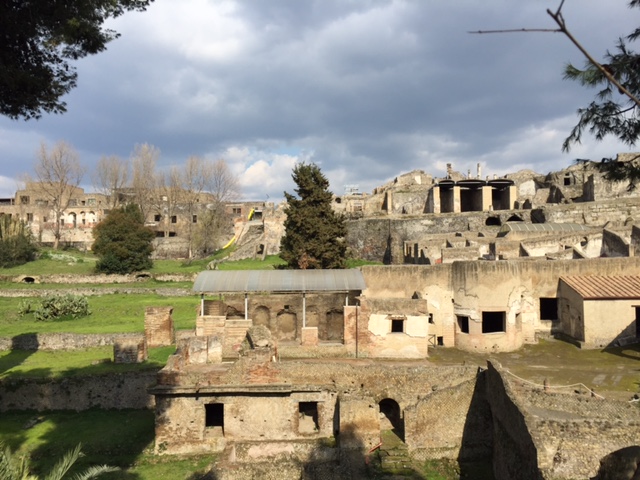
In conclusion, this trip is wonderful! Even though none of us expected that we had to walk ten miles on average each day, every member and teacher in our group shared tiredness and joyfulness as a team. We hardly complained about anything, for we stayed together both physically and mentally throughout the trip. Furthermore, not only do we amaze at the brilliance and splendor of Romanian arts, sculptures and architectures, but we also enjoyed the food and the free time we spent together: I simply loved the enthusiastic and collaborative energy of our group. This is probably the most amazing aspect of group traveling.
Wish you joy reading my blogs!
Sincerely,
Joe Zhu
South Africa Days 1 – 4
Sorry I haven’t posted in a while I’ve been busy and tired!
Day 1 (Sunday): After we landed and made it through customs two men from the team house which we would be staying at later in the trip picked us up and took us to the bed and breakfast we would be staying at for the first week. We checked in and relaxed. They family who owns the bed and breakfast then made us a delicious barbecue dinner, afterwards we hung around and played with their children. When it got dark we all went for a walk to see the surrounding neighborhood. It was beautiful, there were amazing houses and mountain views everywhere, we all took lots and lots of photos. After the walk the adults went to bed and all of us kids hung out together and talked about how cool it was to be in South Africa till the early hours of the morning.
Day 2 (Monday): We had a somewhat early morning but delicious breakfast and went off to Sun Valley School who is graciously hosting us and helping us on our trip. We met with Gavin Keller who is the “CEO” of the school and a hilariously entertaining guy. He told us all about the school and what they are trying to do by approaching education in a completely different way, focusing on how the brain functions. For example, they have all their students walk around barefoot until grade 9 because “you learn through your feet”. It was all very interesting and made us eager to get started with our tours. The tours were led by sixth graders who were incredibly knowledgeable and enthusiastic towards us. After school we went to the water front and took a boat out to see the cape from the water. It was breathtaking!! When the boat ride was over we walked around and looked at all the different shops they had, and walked around the mall a little bit. When we finished touring the shops we went to a somewhat American dinner at a popular restaurant called Spur and had burgers. Then we returned home, and again the adults went to bed and the kids stayed up to talk about everything we had seen and done.
Day 3(Tuesday): Another early morning with a delicious breakfast. After eating, we all got in our van and headed over to Living Hope where we would have orientation for our service, we were all very excited about this because we felt this was the true reason we had come on the trip. This experience was incredible and the only way to give it justice would be to do it yourself, but I’ll try to give you a taste of our experience.
The orientation started with an explanation of what Living Hope is and why it started. Living hope is a foundation that helps those who live in the Townships (the equivalent of slums or projects, created by the government during the apartheid) of Cape Town. It was started when AIDS broke out and there was lots of stigma around the disease. Their goals are to provide education on a range of different things like AIDS and teenage pregnancy, as well as provide support to families who need counseling, struggle with addiction, or are teenage parents. They also have a hospice service for those who are dying of AIDS.
When the introduction was over we took a tour of three different townships they work in and met and talked with some of the people who live and work in these townships. For me and most people who went on this trip, it was out first experience with this kind of poverty and it was challenging to walk through and look at, but it was very powerful and taught us all a lot. After this we went back to Sun Valley and had lunch. When we finished lunch we got to go around to their different sports practices and help coach their primary school teams in sports like swimming and volleyball. We also helped with cricket and netball, but no one knew what they were doing so we mostly watched and talked about the culture of America and South Africa with the coaches. When the primary school practice was over the girls’ high school was having gym class and we played soccer with them. Then we went to the ocean front for a delicious seaside dinner and a taste of authentic South African cuisine, which is delicious! When dinner finished we went to a presentation on the teenage brain back at Sun Valley given by the one and only Gavin Keller. It was very interesting, and explained a lot about teenagers. Once we arrived at the bed and breakfast for the evening, we debriefed about the day and talked about what it was like to go from the Townships to the privileged side of South Africa. We had all had a very full day both in activity and emotionally, making our discussion very thoughtful and enlightening.
Day 4(Wednesday): After such a full day the day before we were able to sleep in. This was also a somewhat easy day because we went shopping at s local market where we bought souvenirs and made attempts at haggling with the vendors (some of us were much better at this than others). When the shopping was finished we had a quick lunch at a buffet and walked to another market. This one was more aimed at locals so we left after a few minutes and went to a museum. When we finished at the second market we took a walk to a museum, after the museum we took a quick stop at the beach and then it was back to the bed and breakfast for dinner and an early night. Caroline
South Africa in Pictures
Wow. So much to process here. I’m trying to wrap my head around the inhumanity of Aparthied. It’s just mind boggling to me that at one point in history, a mere 20 years ago (!), 9% of the population had control over 80% of the land. (Don’t quote me on those numbers). It’s just unreal.
We visited some poor communities yesterday. It took me back to my high school summers visiting Squatters camps on the US/Mexican border–cardboard shacks, lack of running water, electrical lines tapped into city lines, overcrowded dwellings with tin roofs held down by rocks, children running barefoot. And then there’s the other side of the coin, beautiful homes, gated front yards, sprinklers watering the grass, and ironically privileged white kids (and some black kids) attending a top-of-the-line public school barefoot because the philosophy is that children learn better when barefoot. Then every shoeless child across the globe must be super smart! But seriously, the constant shift between the Haves and the Have Nots is just that… constant. I can’t possibly do any of what we’re seeing justice through my writing. At least not yet.
Tomorrow we’re heading out to see more of the city from an open top red tour bus. Our tour guides will be 5th graders from The Sun Valley School. Then we’ll spend the afternoon at the beach. Friday we’ll head to Robben Island where Mandela was imprisoned.
Here are a few pics from the past couple of days.

Table Mountain
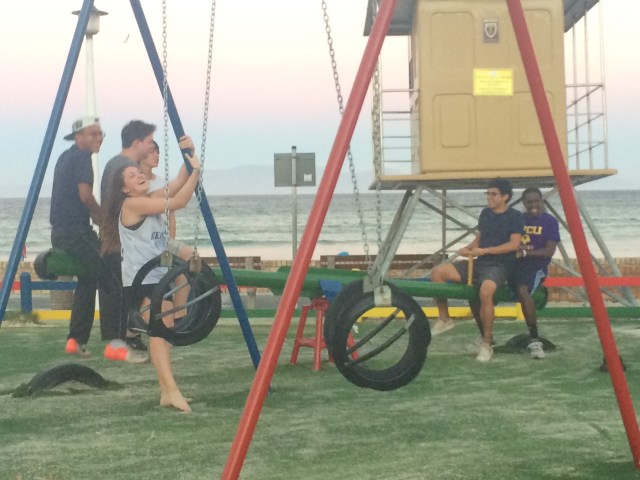
Kids playing on the beach at ground after dinner last night.

The balcony at City Hall from where Mandela spoke upon his release from 27 years in prison.
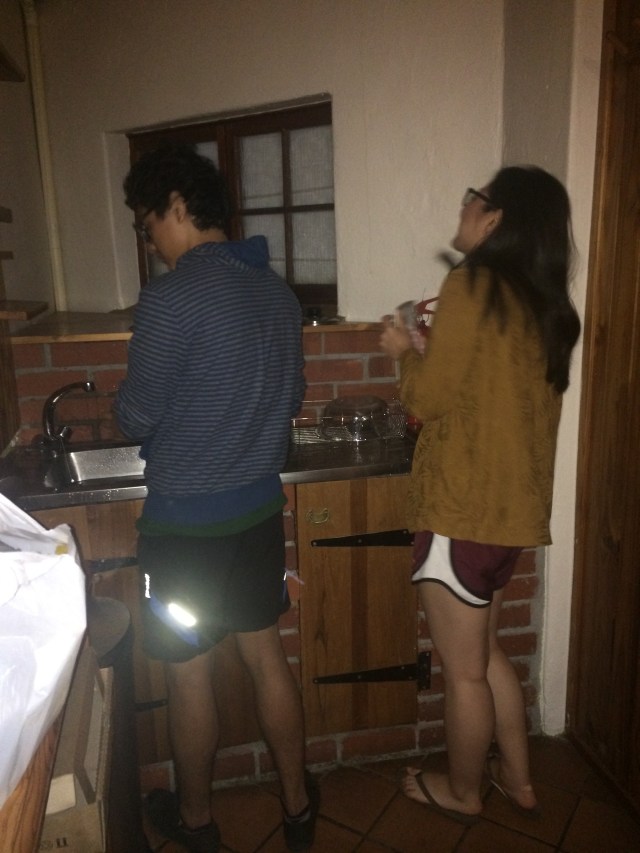
And lastly, you can take the kids out of Work Program, but you can’t take the Work Program out of the kids. Dinner wash after take out pizza for dinner.
😉
T. Melissa
Into Thin Air
When the students saw on our itinerary that there would be an “overnight trek high into the Andes,” they asked for more. “Can’t we do another one?” So before we departed, Maria and I asked World Leadership School to add a day of hiking to our plans. The representative knowingly chuckled, “Let’s just see how this one goes first. It’s hard, you know, climbing at those altitudes.”
3/13/14 – Parting Thoughts
We left Ollantaytambo and headed to the bigger city, Cusco, where we would spend our last night and complete our final purchases before our flight to Lima and then to JFK. This was a nice hotel that had a beautiful outdoor courtyard with gardens and a breakfast room that was made entirely of windows. When we arrived in the afternoon we split off to do what we wished and were only told to stay in groups of at least four. I stuck with a group of five other girls and we decided to head right out and do some shopping. We had been consistently told throughout the trip to save our money until Cusco because everything would be cheaper there, so we were in desperate need of gifts for our families and friends at home. We walked down to the different markets where there were many vendors selling colorful tapestries, sweaters, t-shirts, jewelry, and other trinkets. It was hard to resist all of the beautiful things they had displayed. The vendors were pretty aggressive but we quickly learned how to bargain and were proud to tell our friends of the good buys we made.
3/9/14 – The Saddle
I opened my eyes and saw a tent above my head. It was day two of the overnight hike in the Andes. We hiked most of the day yesterday and then reached our campsite at about 3:30 in the afternoon with time to relax before dinner. It had been hot all day but there was a significant temperature drop when the sun disappeared behind the mountains, and after dinner, when it was dark, we all scurried back to our two-person tents to bundle up and go to bed, despite the fact that it was only 8:30 PM.
When I woke up my stomach was churning, but I ignored it—too cold to think about getting up to get medicine or anything. After breakfast at 7:30, those of us up for the challenge began our hike further up the mountain to the “saddle” between two other mountain peaks. The journey up probably took about an hour and fifteen minutes, but it was very strenuous and hard to breathe. This was probably one of the most physically demanding things I’ve done in my life. We were headed to Inti Punku (Puerto del Sol) or the “Door to the Sun.” When we spotted this door up at the saddle from a distance it seemed much closer than it was in reality. When we finally made it I felt incredible. We were actually standing on top of a mountain in the Andes. I kissed the doorway out of pride when I walked through it, and we stayed up in the little square of ruins for about 45 minutes, taking pictures, journaling a bit, talking, and congratulating ourselves. I tried to memorize how I felt at that moment, looking overtop of the surrounding mountains, so I could save it and feel it again later at exciting time, like maybe when I get into college or something. We were 4,000 meters high.
Going down was a lot easier cardio-wise, but there were many loose rocks and the trail was rather steep, so it was slightly startling when I slipped every once in a while, especially with the steep drop easily within reach.
In the end, we all safely made it down the mountain and, looking back, I think this was my favorite part of the trip.
 Westtown Senior Projects' Blog