Israel: Goodbye “peace,” hello “shalom”

I can’t believe I’m actually starting my Senior Project. I’ve been planning trips in my mind since freshman year- and now I’m finally off.


For the past few weeks, people have been asking me what I’m doing. “I’m going to Israel,” I say. “But not on the school trip, I’m going by myself.” This is often surprising, so I elaborate, “I’m studying water in the Negev Desert, working with Jewish feminists, meeting Bedouin teens…” and that’s not even the half of it. I am going to be traveling the country meeting, living, and working with many Israelis from all different realms of life.


Tomorrow, my trip starts and I will arrive in Tel Aviv and meet Avishay. Now, however, there is much packing and preparing to do!


I will be posting all about my trip, so check back in often.


Shalom


Beyond Beaches and Bikinis: Making Change in Rural Dominican Republic

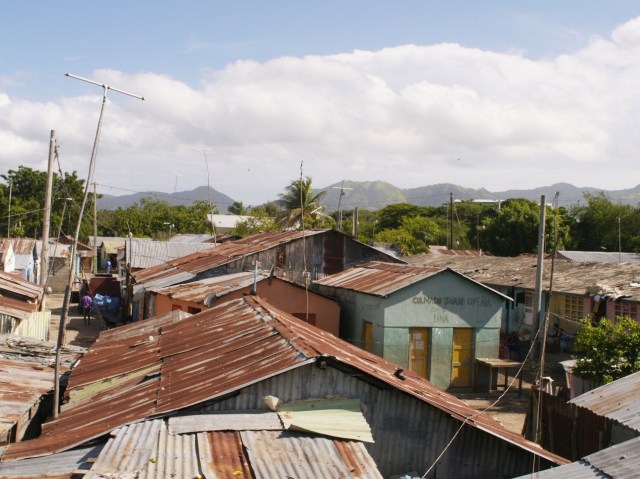
Today I took my last hot shower for the next three weeks. Tomorrow, I get up at 5:00am to fly to the Dominican Republic. From the Santiago airport, I’ll be headed out to Batey Libertad, a tiny town that mainly revolves around the nearby rice plantation and factory. My homestay in the batey (the Spanish word for a plantation town) will be quite a shift from the extremely privileged, comfortable life I live at an American boarding school. If you’re wondering why, here’s a picture of Batey Libertad:

Short Term Volunteer Arrival Packet (1)

Like many plantation towns, Batey Libertad is primarily populated with Haitian-Dominicans and Dominicans of more distant Haitian ancestry. But to many Dominicans, any person of Haitian descent–or maybe anyone who looks like they’re of Haitian descent because of their darker skin–is simply one of los haitianos. People of Haitian descent can face severe discrimination in the Dominican Republic. In some ways, they’re perceived much the same as many Mexican migrants are in the United States–as outsiders who don’t belong, who take advantage of the country, who steal jobs, who are immoral criminals: much of the same racist, xenophobic rhetoric is applied to Haitians in the DR. Under Trujillo, the dictator who ruled the country until the 1960s, thousands of Haitians were even massacred.

Today, especially in bateyes, los haitianos are denied civil and human rights (like citizenship and the right to freedom of movement) and can be deported to Haiti even if their families have lived in the Dominican Republic for generations. Many bateyes have limited access to clean water, health care, and education. Fortunately, some organizations have stepped forward to improve life in bateyes, and this spring I have the privilege of working with Yspaniola, an organization that has helped bring improved sanitation and clean water to Batey Libertad. I’ll get the opportunity to work with Haitian-Dominican kids to improve literacy in Yspaniola’s Learning Center, learn about the plight of Haitians in the Dominican Republic alongside students from Yale, and learn about Dominican life from my host family. I’m nervous, but excited, and armed with a few choice Spanish-language picture books.

I know in the Dominican Republic I’m going to get sunburned. I know I’m gonna miss the conveniences that come with my cushy American life and that I’m going to have awkward language mishaps with my muddled, poorly conjugated Spanish. I know that I am going to face uncomfortable truths and realities I have never before had to confront, of poverty, racism, and discrimination. But I am going to do to what I learned at Westtown and lean into my discomfort rather than shy away from it, and I know I will come back to school having made deep connections across cultural barriers. I hope I will also return more humble, more grateful, and ready to continue on my journey to make change. This is just how I take my first step.

Saludos,

Charlotte

Kittens and Mittens

All my life, I have loved animals. My best friend and companion, Shadow, died recently this year. He was the love of my life, even though he was a cat. For my Senior Project, I wanted to spend time doing something low key with animals. Cats to be more specific. I chose to volunteer at the Chester SPCA. I did my orientation and learned the dos and don’ts and realized that this was the place for me.

I visited the shelter recently to remember what I learned. I was a little nervous and shaky, but nothing bad happened. One older woman challenged me as an oriented volunteer, even though I was wearing my volunteer shirt and badge. She brought me down and continued to scold me during my hour-long visit. My hope was raised when a cat was adopted by a mother and child. The joy that filled the room spread to every person, even the people who were not adopting.  

That was the moment I knew it was the place more me. I was not there for the people; I was there for the cats. I am very excited to work with the felines and spend time giving back creatures smaller than me.

Until next time,

Rosie

Live Music, Live Passion

Hello! My name is Amanda and I will be going to the South by Southwest (SXSW) music festival in Austin, TX for Senior Projects. I write for a music blog, When the Gramophone Rings, in my spare time (my posts can be found here) and I even dedicated a semester-long independent course to my blogging. In the fall, I did an Independent Seminar in English where I music blogged and researched what makes effective blog posts.

I love music and how it forces emotions upon listeners. In my opinion it’s the only art form that elicits specific emotions from audiences. One of my favorite quotations is, “[Music] has the power to command people how to feel. Imagery, words, they’re very suggestive, whereas music can command somebody how to feel on an emotional level, uncontrollably,” said by Matty Healy of The 1975. I decided to pursue SXSW because I love live music more than any other form of music. It’s much more personal than listening to music digitally, which is what we do on a day to day basis. Live music gives a space for musicians, their music, and their fans so that everyone can feel the same emotions and feel attached.

My personal goal for this project is to soak up as much music and fully live the experience since SXSW is such a unique festival. Other major music festivals like Coachella in California, Bonnaroo in Tennessee, and Glastonbury in England, are held in big open fields with multiple stages where artists play at all times of day. SXSW is different because it happens right in the heart of Austin in the hundreds of music venues that already exist in the city. These venues host showcases, which are basically like any normal concert but with about 4-5 bands playing in a night. During the day, companies and record labels host “unofficial parties” which allow companies to push their product while providing entertainment through the bands that are in Austin for the festival. Since SXSW is so different from other festivals, I want to take advantage of its set up and see as many artists as possible.

My more professional goal is to go see artists that I wouldn’t normally see and to push myself out of my comfort zone with music. I usually review similar songs (usually ambient/dark indie rock or beachy indie pop) for When the Gramophone Rings, so seizing this opportunity to really discover music will be an interesting and challenging change for me. My assignment from my editor at the site is to write something along the lines of a ‘Best Discoveries at SXSW’ piece. I think that works well with my personal goal and it will allow me to see artists I wouldn’t necessarily see if I was going to SXSW on my own, without an assignment from the blog.

One major obstacle that has come up already is that a large amount of venues for showcases and unofficial parties are 21+. I’ve had to narrow down which artists I can see since only some of them are playing venues I can get into. I thought that would limit me a lot, but after looking at the line ups for venues I can go to a little more closely, it looks like there’s a great range of smaller, unheard of bands. I don’t think any other obstacles as big as this will come my way but we shall see…

Going to SXSW is the main part of my project, but I will also be writing for the blog for the first week of Senior Projects before I go to SXSW. Since March 8th is International Women’s Day, When the Gramophone Rings will be doing a women-only week from March 7—March 13. All the female writers will be covering female artists for the whole week, no men allowed. I’m really excited to be writing for that week since I think it’s a great showcase of women in music. That will keep me busy for the first week then I’ll be off to Austin.

I’m really excited to start my project. I think that it will be a great opportunity for me to discover new music in a way that really interests me as well as a way for me to connect with artists and write about what I enjoyed at the festival. The women’s week will be really neat to watch unfold since there’s a ton of women getting involved, both writers and musicians. Writing for this Westtown blog will also help me process what I’m seeing and give me a way to reflect on what I see and do. T minus 16 days to Austin!

-Amanda

Ghana: The Excitement Leading Up

Hello everyone! For the next couple of weeks I will be giving you the inside scoop on what is going at Heritage Academy in Ghana! With only a week and a half before we fly to Accra, the nine students and three teachers are getting final packing lists together as we pack for two exciting weeks. We are all teaching classes, in pairs or alone, and this past week has been full of writing lesson plans and meeting with teachers from Westtown who teach our subjects. In addition to preparing for our classes, we have been packing up shoes that Lower School collected, which  will then be donated to people throughout the village of Essiam. There are suitcases upon suitcases full with shoes that were donated, so many that we are struggling to find room for all of them!

Please check back often to find out what we are doing in Ghana!

Peru so far..

Let me begin by saying that Peru maybe the most beautiful country on the planet. It has something geographically for everyone; beautiful coast to the west, the valleys and mountains of the Andes, and not to mention 60% of Peru is actually a part of the Amazon Jungle. I have spent the last two days in the Sacred Valley and it’s surrounding area. Narrow, winding, roads led us to Chincherro, Maras, and Urubamba, but it was a train yesterday that took us to Machu Picchu. Our guide Marco told us to look out the window at a certain part of the train ride where the landscape literally transforms from mountainous/alpine-y type forestry to jungle at the base of these massive mountains. I have taken about 250 photos since I have arrived to Peru, so here we go with some new landscape style photography.
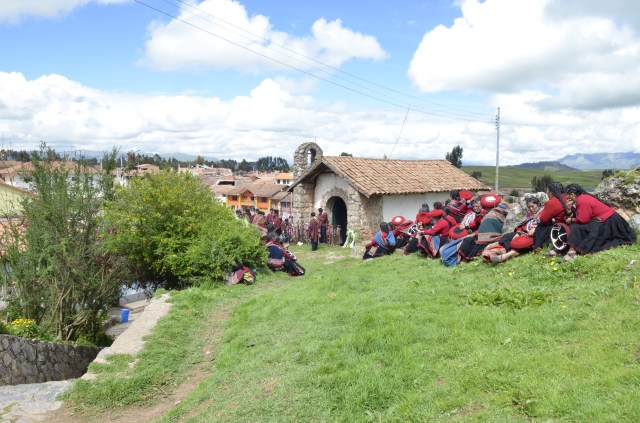
 

We visited Chincherro on Sunday, and this is a scene of the local leaders (only the men) of the town doing their Sunday service. The women pictured to the right are their wives who listen in on the service.

This ancient Huaca was used as a ceremonial space, and it is commonly thought that if the people were to wish for good crops, soil, etc. they would gather in this space, face the land, and pray for it’s fertility. In general, Huacas are used to get in touch with the spirits of the earth such as the sun, wind, stars, etc.

This church was built in the 16th century by the Spanish when they conquered Peru. They very kindly built literally on top of the Incan infrastructures which is why there is an inconsistent divide between the white Spanish pavement and Incan masonry.

This is a street made of steps in Chincherro which proved to be very exhausting on our lungs at 10,000 ft. elevation.
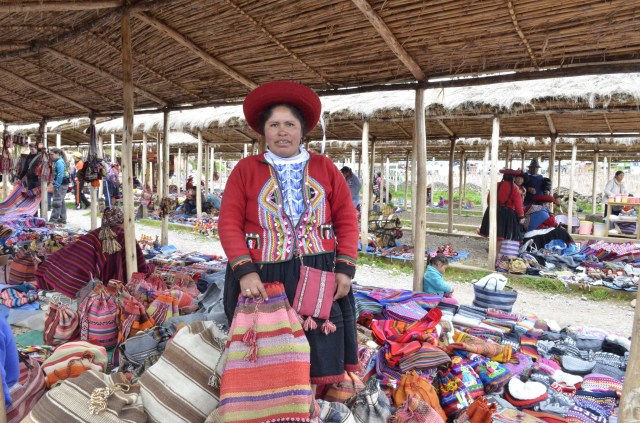
This local woman (from whom we asked permission before we photographed) sold us that backpack in the local market of Chincherro (only open on Sundays)  where the merchants like to bargain with the customers. It is kind of like the Italian Market because they sell absolutely everything from food, fabrics, toys, etc. We learned some new words in the local language, Quechua, to help with the bargaining.

The next town we visited was Maras, which owns this salt mine. There are about 4,000 ponds in this area that uses water that has been running since 450 AD (and has never stopped since then) as a means to fill these ponds. Then in the dry season, when the water evaporates these ponds are left with crystal white residue which we know as table salt. Farmers will often carry 100 kilos of salt back to their town to sell. One more interesting fact is that if a man wants to marry a girl from the town, the family will give him a pond to take care of and depending how  well he maintains it, they will give him their permission to marry her.

This Incan ruin was used for farming different crops such as corn, potatoes, and flowers. They were able to make the circles look so perfect by having a man stand in the center, attached to another man by rope who would then walk in the circles to mark them (like a human compass).
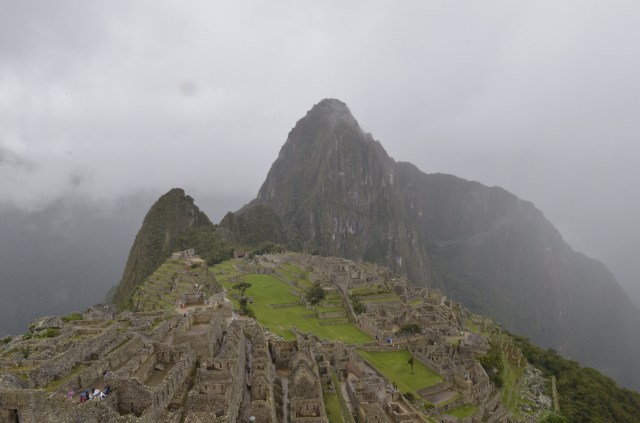
This, of course, is the famous Machu Picchu citadel ruins being overlooked by the Wyana Picchu mountain. It was discovered by some American explorers in 1911, and had only been accessible through the Inca Trail for a very long time. In more recent days, they send buses of about 60-80 people up and down every few minutes. The three major parts of Machu Picchu are known to be the worship area, agricultural area, and urban area.

We have one more (hopefully less rainy) day in Machu Picchu, but tonight we take the train back to Urubamba where we will depart for Cusco, the last visit of my Senior Project.

~ Eden
Final Days in the Archipelago 

Since my last post, my parents and I continued on our pursuit through the beautiful (and pristine) Galapagos Islands, which came to its conclusion today 😦 . Again, I will be taking the pictorial approach with my favorite picture from each excursion.

We spent our first day back in society with people other than those on our boat, which was a little weird, honestly. We had spent the first five days completely immersed in nature, with no cellphone or internet connection to the outside world (we were shocked to find out it snowed today back at home). The streets of Santa Cruz Island (population 20,000) are narrow, but busy. The most interesting place however, was the fish market run by two locals, who were being badgered by hoards of sea lions and pelicans.

That afternoon, the naturalists took us to a remote farm in the country of Santa Cruz Island, where tortoises come to hang out. Pictured above is my 6’3″ dad acting as a size comparison to this massive tortoise.

On Wednesday morning we visited Post Office Bay, a famous site first created by English whalers who would leave mail in the barrel for other departing English whalers to pick up and deliver to the recipient. This became a tradition at the Galapagos, and people now leave post cards for whomever, and as soon as someone who lives around that area comes to the post office barrel, they pick it up and deliver it in person. The result is a new friend you can share your story/experience in the islands with. Enrique, one of our three naturalists, is pictured above explaining the bin.

This was all happening on the island of Floreana, the famous site of the “Galapagos Affair” in the 1920’s. This is a famous story of a dentist Dr.Ritter and his mistress Dore Strauch who went through extreme measures (i.e. pulling out their own teeth and then sharing a pair of dentures) to live on Floreana. Their paradise was interrupted by a baroness who came with two other men, and the whole thing ends up with death and disappearance throughout the party.

In the afternoon we visited Punta Cormorant where we witnessed a rarity that is a group of blue footed boobies diving into the water for fish (pictured above). After that we hiked to the sea turtle nesting grounds and watched close to the shoreline for baby stingrays.

Yesterday, we visited Santa Fe Island where we saw the most adorable sea lions I have seen in my life. They were all over the place and the aroma was quite… pungent. We observed one male sea lion instigating trouble among the others, because that is what they like to do when they are bored.

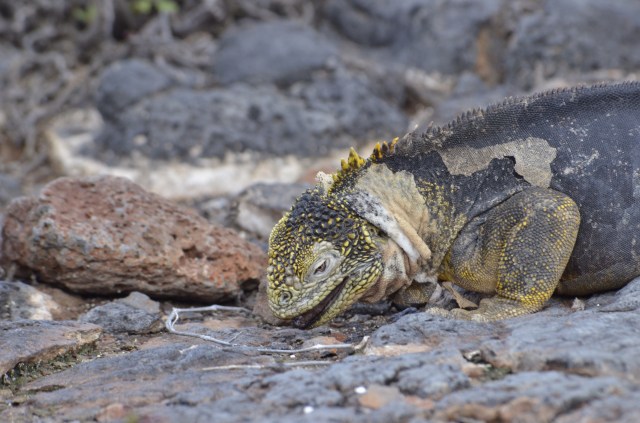
Our last excursion of the trip was on South Plaza. We observed the endemic (to that island) species of iguana, the Santa Fe land iguana. Along the cliffs there was a wind tunnel housing hundreds of different species of birds, among which were swallowed tailed gulls, blue footed boobies, nazca boobies, and shearwater birds.

This week has been truly incredible. It is so rare to see land virtually unscathed by humans. It will be very strange to go back home where wild animals will most times run away from everyone, even those without cameras, binoculars, etc. Right now we have an overnight stay in Guayaquil, Ecuador, and this time tomorrow we will be in the Sacred Valley of Peru. It has been a lot of fun learning how to use the massive 80-400mm lens, however I am looking forward to the change of photography pace using the wide angle landscape lens.

-Eden

Tiny House: Update

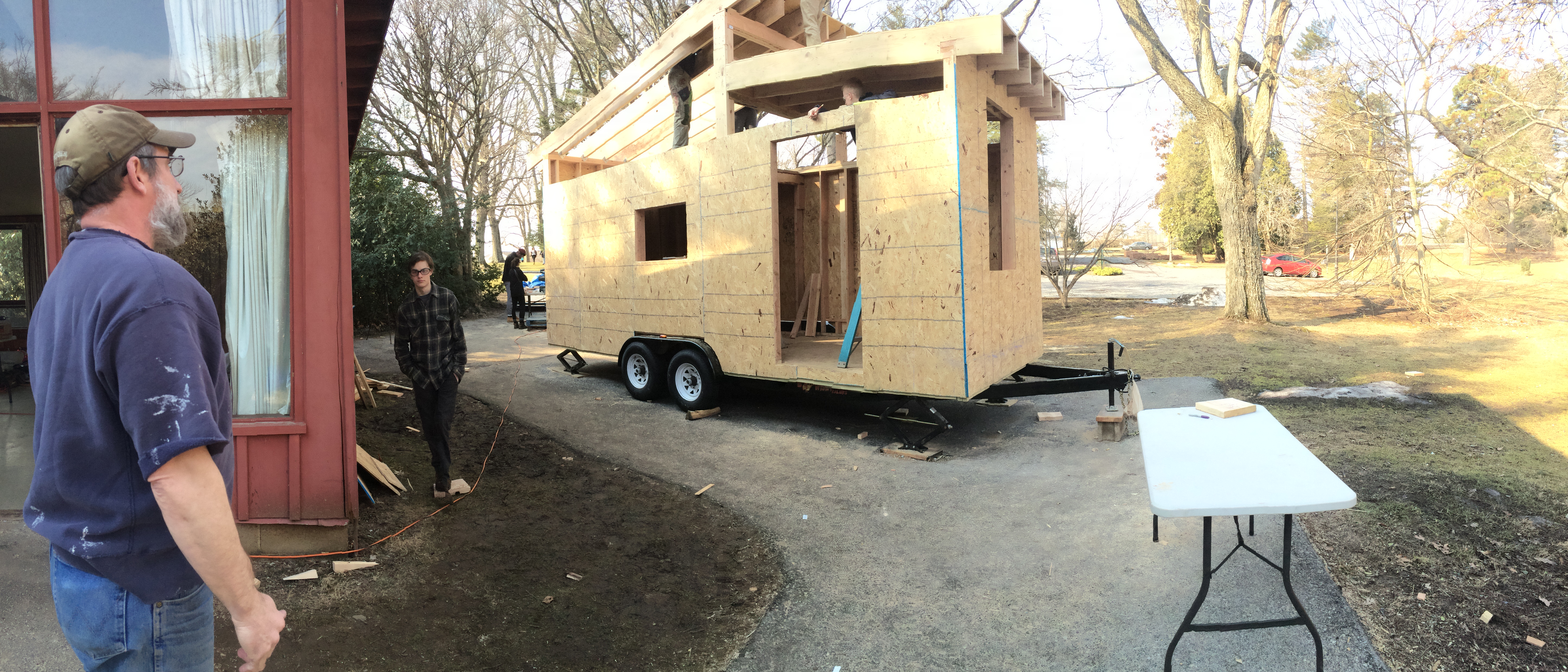
Today marked the ninth day of the Tiny House Project.  It’s hard to believe that we started with a trailer just over a week ago and now we have all the walls and the roof up! With just two days to go, we are ready to work extra hard to get as close as we can to our goal. We would like to finish the whole exterior of the house including installing the windows and the door.  While some of us worked on the structure of the house, others worked on the interior; this is a work pattern we have been using since day one. One of the coolest things we have worked on for the inside of the house has been a countertop made out of live-edge wood. We started off by cutting the wood in half and running both halves through the planer. We then put the two pieces next to each other and worked on making them level. Now, the two pieces are joined, sanded and coated and we have our finished countertop for the house.

There was a moment today while we were working when I felt completely peaceful. This moment took place in the loft of the house (kind of like a skybed) where our guests would be sleeping. I climbed up and just sat there for ten minutes, my feet hanging off the side of the house. The wind was blowing in my face but all I could see was the clear blue sky. This moment made me realize how incredible this project is and how I will never get an experience like this again. We have had so much fun together that our 7-8 hour work days just fly by. So many people have come by to visit us including Teacher Sam, Teacher Paul and Teacher Karl. I hope many more people will come visit once it is finished! I will be sure to post tons of pictures on Thursday. Until then, we invite you to come to the Cabin and visit us!

Day 9

-Rachna

Hitting the Streets

In our matching Living Hope T-shirts we took to the streets of a township, Overcome, today to spread the word about the importance of hand washing and rehydration as they relate to the prevention and treatment of diarrhea. It was a powerful experience for our group to witness such poverty first hand.  We split up into smaller groups with local interns working with Living Hope (the faith-based NGO sponsoring the project) as well as similarly associated community members familiar with the people and streets of Overcome.  We were very well received by the residents who seemed appreciative of our presence and message.

I managed to sneak a pic, but for some reason it won’t upload. Rah!

More service tomorrow and an afternoon with kiddos in the after school program.

-T. Melissa


Galapagos Islands

I apologize for not writing, the boat we are staying on had broken Wifi for the first few days. We have done so much in our first few days of being here, so much that it would be hellish to read a massive paragraph about it. So, that being said, I will do a more pictorial approach to this choosing my favorite photograph that I have taken from each excursion we went on.

We arrived one hour late to the Galapagos, so the afternoon felt pretty rushed. When we arrived to North Seymore Island  however, time slowed down as we entered these animals’ habitat. Other animals we saw on this island included blue footed boobies, male/female frigate birds, land iguanas, and of course sea lions.

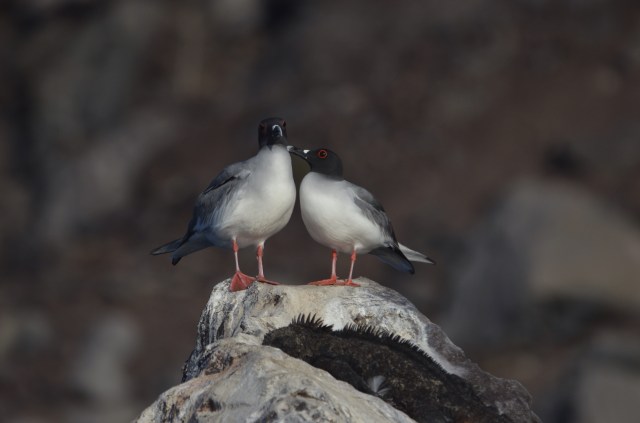
The next morning we left the ship at 7 a.m. for a coastline tour of Isabela Island. On this trip we saw the landscape of the cliffs of Isabela Island, clearly defined layers in the rock where you can see the land formation. Other than that there were sally-lightfoot crabs, marine iguanas, Galapagos penguins, sea turtles, and the swallowed tail gull pictured above.

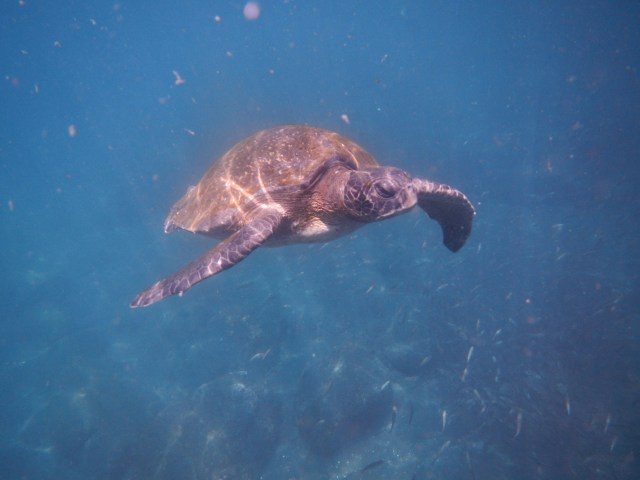
We have been snorkeling everyday so far. I have been taking a lot of videos with the GoPro, but my dad captured this image of the sea turtle.

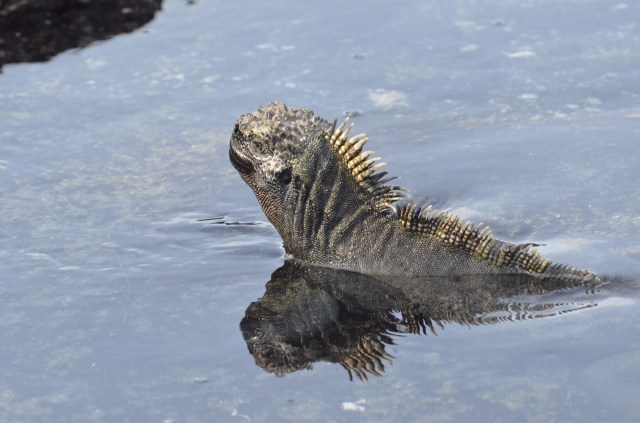
On the island of Isabela, in the afternoon we took a tour of the Island shore where we hiked along lava rock and dodged what had to be thousands of marine iguanas (one of which is pictured below taking a swim). On that island we saw lots of flightless cormorants, more blue-footed boobies, sea lions, sea turtles, and more species of crabs I was unable to identify. We were also able to get the rare experience of seeing a marine iguana hatchling in the wild.

The next day, we were on the island Fernandina where we were able to see the Giant Tortoise in the wild. The big guy pictured above was one we encountered on the trail. There weren’t many other species other than the Galapagos carpenter bee.

Yesterday, we were on the red sands of Rabida Island. We saw mockingbirds, cactus finch, medium brown finches, land iguanas, marine iguanas, oyster catchers, flycatcher birds, and the Galapagos dove (pictured above). In the afternoon my dad and I swam with some white tip reef sharks, manta rays, eagle rays, and lots of parrot fish.

In the afternoon we hiked up Cerro Dragon, where we saw many land iguanas, and a single flamingo, since the Galapagos is the only place in the world you can see a single flamingo.

Galapagos has been fantastic so far, and hopefully the internet on our boat will be fixed so I can share more pictures for the rest of our time here!

-Eden