Giant’s Causeway

Hello again! I’m terribly sorry for the lack of blog posts! I’ve been travel through several rural areas of Ireland with horrible wifi and cell phone service. However, I’ve been writing my blog posts all along and now I’m finally able to post them! An important side note: the date that these posts were written will be listed first and followed by the day they were posted in parentheses.

March 6th, 2018 || (March 10th, 2018)

Ireland is a lot more beautiful than I thought it was going to be. Before coming here I had this preconceived notion that in Ireland it was going to be constantly raining, drizzling at least, with cloudy skies, ugly green hills, and dark navy oceans. I was so terribly wrong. After landing in Dublin on March 5th my father and I embarked on our two-hour drive (on the “wrong” side of the road) past Belfast to Ballyclare to meet with my cousins Stephan and Stephanie Deyermond. Then as a group, we drove up to Port Rush and had a lovely dinner together. The following morning my father and I adventured to Giant’s Causeway. In my family, it’s a tradition to visit Giant’s Causeway when in Ireland. For those of you who don’t know, Giant’s Causeway, or simply the Causeway,  is a series of 40,000 interlocking basalt columns, which formed as a result of an ancient volcanic eruption. They are also infamous due to their hexagon pattern. Furthermore, Giant’s Causeway has been recognized as a World Heritage Site and national park. Continue reading “Giant’s Causeway”

Aux Grands Hommes (Et Femmes)

March 8th and 9th

“And while I understand and feel/ How much to them I owe,/ My cheeks have often been bedew’d/ With tears of thoughtful gratitude/…/ My place with them will be,/ And I with them shall travel on/ Through all Futurity;/ Yet leaving here a name, I trust./ That will not perish in the dust” –Robert Southey

March 8th and 9th, I went to pay homage to Paris’ two most iconic sites for art and literature: the Panthéon and the Musée d’Orsay.

The modern Panthéon in Paris is named and (partially) modeled after the famous Roman Pantheon in Rome. The name “Pantheon” means, in Ancient Greek and Latin, (temple) to all the gods. rome-pantheon

Continue reading “Aux Grands Hommes (Et Femmes)”

Above the Clouds – China Day 8

Written and posted March 10th, 2018

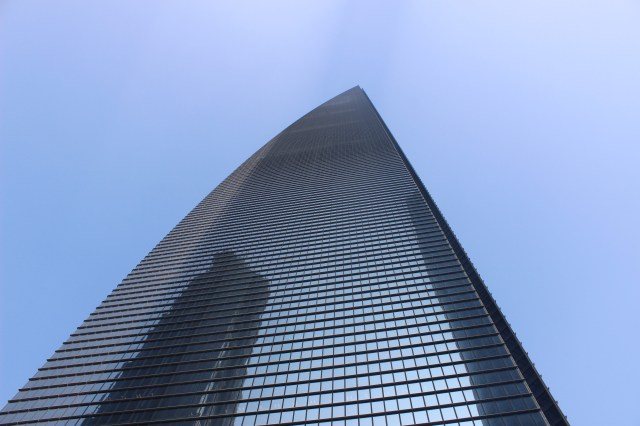
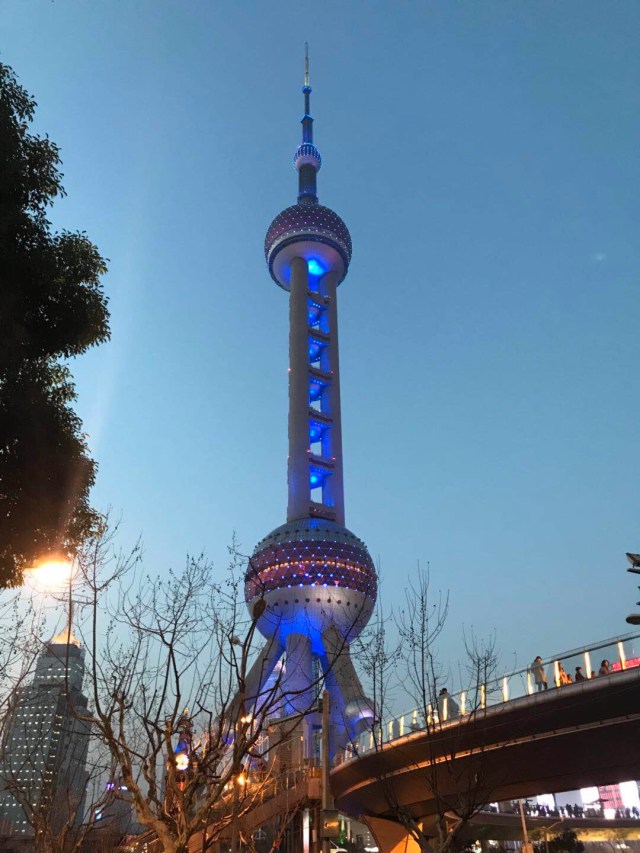
Today we flew from Guilin to Shanghai! While I was extremely excited to be going to Shanghai I didn’t want to leave Guilin and today was probably one of the worst days on the trip. Late last night and into the morning about nine of the twenty people in our group got sick with food poisoning. We still aren’t exactly sure what it was from, however, it made for an interesting morning and day. After we arrived in Shanghai we summited the Shanghai World Financial Center which is the fifth worlds tallest building. It was amazing being able to see the whole city! The sick people then went back to the hotel to rest and I and about ten others explored the Shanghai mall and went to a quick dinner before returning to the hotel ourselves to sleep.

This blog post is extremely short since we didn’t do much with it being a travel day and people being sick. Enjoy!

– Anna

Philly to Europe

March 9, 2018

Hello. My name is Auria. I will be leaving Philly in two days to go to Spain and Portugal for my Senior Project.

I’ll admit something right now. I have never taken a course in Spanish or Portuguese. I know the basic “hello” and “thank you” for Spanish, but that is the extent of my knowledge in the language. As for Portuguese, I don’t have a clue. I suppose that’s one of the reasons I want to go visit though. I love the warm, fuzzy feeling I get when I try to decipher what a word means. I’ll definitely have a dictionary on hand though.

I spent this past week researching various locations in Spain and Portugal and building a more thorough itinerary. It’s been pretty exacting. Selecting where and what I will visit was fairly easy. However, determining the kind of travel and taking into account the travel time was something else. Making sure everything fits within the budget I set for myself made everything even more difficult. Needless to say, the reviews on TripAdvisor and Google Maps have been my best friends for the past week. I honestly can’t imagine what I would do without them. Thanks, guys.

I’ll first be visiting Barcelona, then Madrid and Seville. After that, I’ll be heading over to Portugal. I plan visit a variety of museums and try new foods. I also wiggled in a few palaces and churches here and there. All in all, I am excited to observe the difference in atmosphere between more modern areas to those with a few hundred more years to them.

Throughout the (coming) series of posts, I’ll sprinkle in a few photos. I hope you will enjoy reading about my travels in Spain and Portugal!

Auria


Is This Real Life? – China Day 7

Written and posted March 9th, 2018

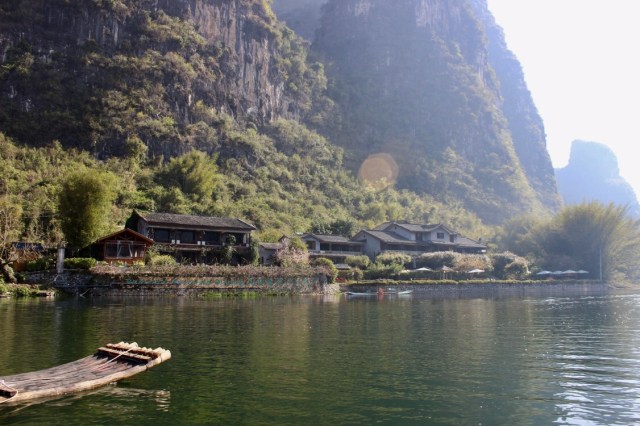
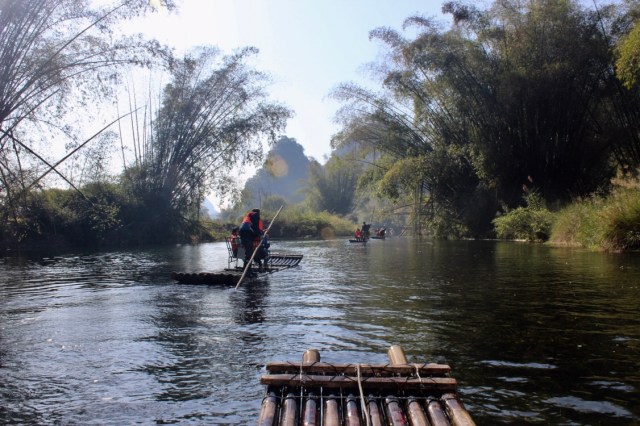
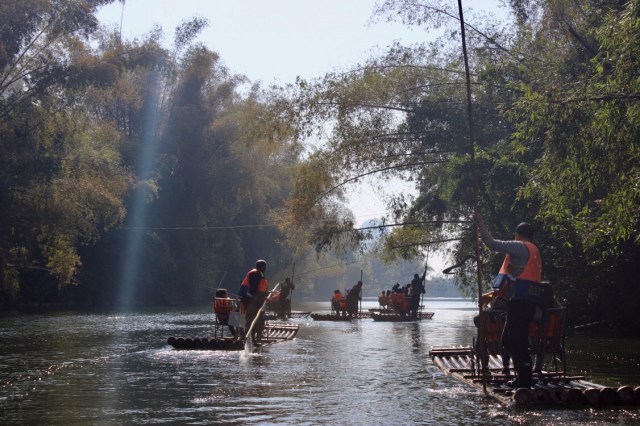
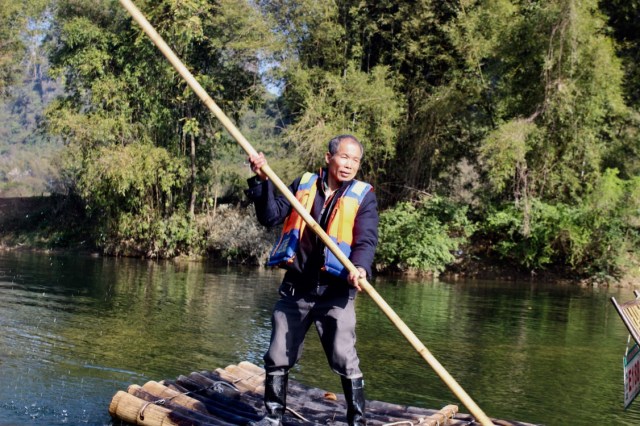
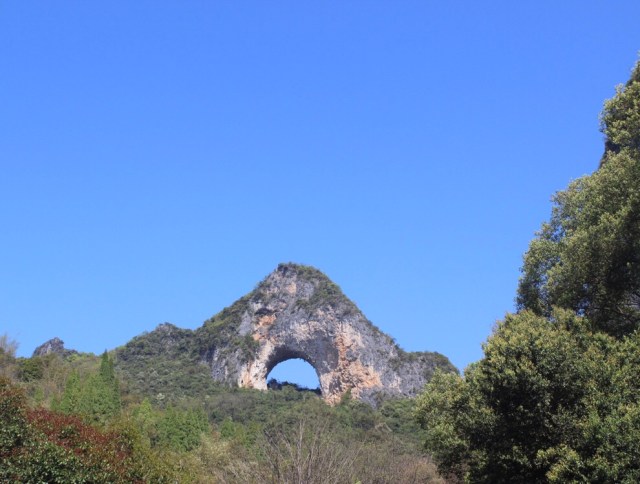
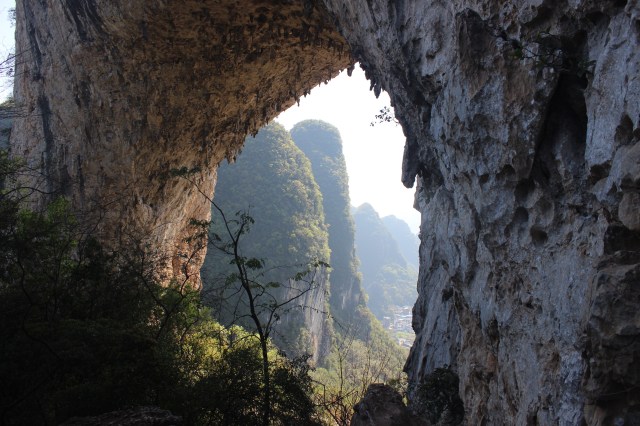
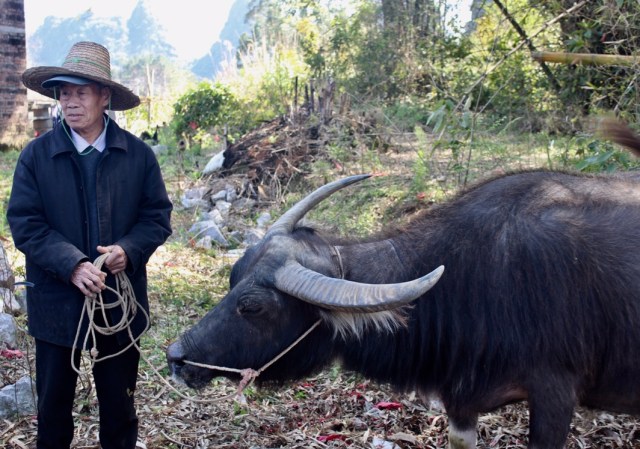
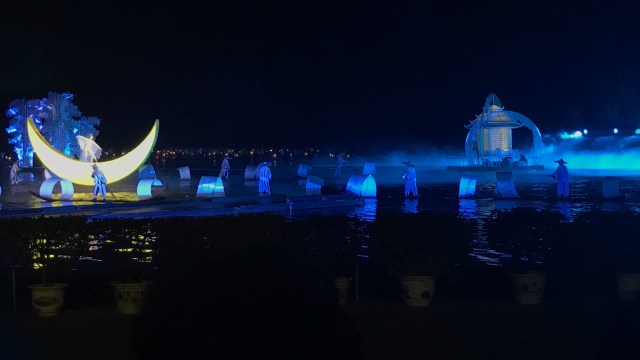
Today is another just photos day. We went bamboo rafting, hiked Moon Hill mountain, saw how farmers live in China, touched water buffalos, and went to Liu San Jie; a great outdoor performance.

Enjoy!

-Anna

Lukachukai – Lucky Chucky (Day 5)

Overview:

Today we woke up in Gallup and headed to Shiprock to work on the Navajo reservation with the Johns Hopkins Team stationed there. Part of their efforts to prevent early childhood obesity is providing clean drinking water to families with children ranging from 6-9 months. Clean drinking water is hard to find on the reservation; the tap water isn’t clean and buying water gets expensive. This leads families to go look for cheaper, less healthier options. In order to create healthier options, the center delivers water weekly to families in the reservation. Today, we started in the center helping out fill water jugs and than we were fortunate enough to be able to help bring the water to two different home visits. There we were able to meet two different and lovely families and see some beautiful scenery along our way.

Jane:

Our first water delivery was to a family that lived near the Johns Hopkins Center. It was to a single mother of two adorable boys, living in a house sanctioned for lower income families. We were bringing them two jugs of water and to get some photos for Johns Hopkins. The mother had a boy that was two years old and a 8 month old baby. They may have been the cutest thing that I have ever seen. ever. When we initially got there the mother  was a little hesitant to engage but once Ed showed her one of the shots he had taken of her, she opened up quite a lot. She started staging the boys, posing with them, laughing a lot, and engaging with us as well. I think at first she was very wary of these outsiders entering her space but once she felt our energy of good intention and absolute love for her kids, she started to relax. Once she had relaxed, I could finally relax. I was worried that we would be invading these people’s lives and disrupting the flow, I needed her approval to feel okay with our presence. The younger boy was constantly bringing different toys out to show and give to us. He showed us so many of his toys ranging from a red chair, fake cellphone, dog rattle, and his bell. He had this long gorgeous hair that his mother was growing out. He loved the camera and was the most well behaved child that has ever existed. ever. His brother was as well. He had just woken up for a nap and was so content. Never in my life have I seen a child be woken up from a nap to go engage with a bunch of strangers and be so happy. But what pulled my heartstrings the most was how they interacted with each other. The older boy was constantly holding his brother, pushing him around in his playtoy mobile and making him smile for the camera. This experience may not have been the deepest nor the most eye opening but it definitely taught me something about family. I know that as long as those two boys stick by each other like they are doing now, and they stick with their mother who clearly cares about them very much, than they can handle anything life throws at them.


Maggie:


At 11, we were told we were going on another outing to photograph the water distribution program. Members of the staff implied that we would want to bring out cameras on this outing, as we would be able to visit Shiprock from a closer perspective. When taking the headshots, one of the founders of the program recounted the history of Shiprock. Once a volcano the soft rock had eroded to form the staggeringly large structure, leaving behind the hard volcanic rock. On either side of the rock, two expansive ridges also remain from the base of the volcano. We were told that from above, the ridges look like wings expanding from the rock itself. Traditionally, Navajo people called it Tsé Bitʼaʼí, or winged rock, to honor this resemblance. When the area was colonized, however, it was renamed Shiprock, as that is what the colonizers first thought it was. The name is now ironic on many levels, primarily because New Mexico is landlocked and most Navajo people had no idea what a ship was. The name remains on the reservation to this day, though some Navajo have begun to reclaim its original name.

As we neared Shiprock on the way to the water delivery, we took an abrupt right off of the highway onto a dirt road sprawling towards the rock itself. After about fifteen minutes of almost off-roading, we stopped at the base of the Shiprock, all gawking at its sheer size. This was one of the most incredible moments of the trip, standing in the grasses and shrinking next to Tsé Bit’aí.

As we continued on our journey to the next home, I experienced the most swift and dramatic change in scenery of my life. At first, everything was tan: the shrubbery, dirt, and Shiprock exploding from its flat and dusty surroundings. As the road spread out before us, suddenly the world became red with rocks and sand, as if moving along a natural gradient. Just as soon as we entered Red Rock Valley, where horses walked along the highway and everything was tinted pink, the road began to incline and twist, launching us up and over the mountain blocking the road. We chugged up the sharp turns, and trees started to accumulate. The ground snow suggested we were entering a ski resort in the middle of Arizona, though the undeveloped land proved otherwise. At the top, the pines opened before us for a brief moment, revealing the valley for all its beauty, resembling a grass sea behind the red sand. I begun to understand why the white colonizers called Shiprock a ship. On the other side of the mountain, the red returned, in the form of enormous boulders and cliffs with sunken caverns.

I felt like a child playing in an oversized world, leaving a sense of insignificance and yet wonder instilled within me. The beauty of each detail, the small wash, the red coves in the cliffs, the snow-topped mountains, spiritually captured me in a way I thought unimaginable.

Gwyneth:

Our second water delivery trip took us from Shiprock across the Red Valley and through the mountains to the small community of Lukachukai. The landscape was magical of course, but the most special part of the journey was the family we met at its end. We had a bit of difficulty locating the home we were supposed to bring the water to, but when we finally did, we were greeted by two llamas, a sheep, a rooster, a group of dogs and goats, and a turkey named Thanksgiving. This eccentric group of animals is cared for by the family of an extraordinary young woman who was kind enough to welcome us into her home. She began by taking us around her yard and letting us pet her animals, which she explained that she owns more out of her love of animals than for their practical use. The bond she has with the animals became clear when Ed photographed her with one of the llamas, which she adopted from a friend who had to give them away. She told us that when she first got the llamas – a mother and her baby – she had no idea how to take care of them and had to look up information on her phone after they arrived. Nonetheless, over two years later, they are clearly healthy, happy, well cared for.

After Ed finished taking the llama photos, the woman showed us her family’s hogan – a traditional Navajo dwelling. She told us that her wedding had taken place inside, indicating that the building has played a very important role in her life and that of her family. When Ed asked her if there was something she could hold while being photographed outside the hogan, she went inside her house and brought out her adorable eight-month old daughter. My heart melted watching as the baby, just woken up from a nap, grew more aware and came alive in front of the camera, smiling at us and hugging her mother.

When the photoshoot was finished, we were able to go inside the hogan, where the woman’s parents and older daughter sleep. The interior was a mix of traditional and modern, with all the typical components of an “ordinary” bedroom combined with a sense of Navajo history and a powerful feeling of closeness to nature. Inside the hogan, we heard about the woman’s extended family, including her brother-in-law in the army and her nine-year old niece who has already been engaged in autism awareness activism for several years.

Finally, we went inside the house, where we met the woman’s younger sister, who cares for the animals while she is at work three hours away in Ignacio, Colorado. There, she works five days a week as a pastry chef at a casino, having studied at Le Cordon Bleu in Scottsdale. In addition to this, she weaves, makes children’s costumes, and creates and sells accessories made out of sacks of Bluebird Flour. The amount of drive and energy required to do all of this is astounding and inspiring. And perhaps most extraordinarily of all, she showed no indication of being stressed or tired and was gracious enough to spend her time showing us around her home and sharing her stories with us. Her dream is to open up her own pastry shop, hopefully sometime in the next two years. With her talent and work ethic, I can’t imagine anything that could possibly stand in her way. Meeting her – a woman who embodies feminine strength to the core – was an indescribably moving experience and one of the highlights of my trip.
 

Things Got Very Busy Very Fast- Cooking with a James Beard Award Winning Chef

March 8th 2018  9:09 P.M CST

So the last four days have been quite crazy to say the very least. Monday was a day starting to do prep work for what was to come on later in the week. Going into the later half of the week there was multiple events going on later in the week.  After Monday’s prep we went into service not knowing what to expect the crowd would be like. It just so happened that it was quiet, and we were able to leave early. However, Chef Tio told us that the next morning we would be leaving in the morning when she does and follower her for the whole day. This meant not sleeping which I was able to do for the past few days. The day included going to the gym,breakfast, food shopping,and beginning to prep for a catering event for Wednesday. The cool part about Tuesday was that Chef Tio had a speaking event at Sprint’s headquarters which are just over the state line in Kansas. She along with two other successful women from the Kansas City area to talk about empowering women in the workforce. This was ahead of  International Women’s Day which was on Thursday. It was amazing to hear her talk about her experiences as a women chef in a male heavy profession. This was because she showed all of the power and tenacity needed to get to where she is today. That event took up most of the night. IMG-0811  – Chef Tio speaking at an event at Sprints Headquarters.

Continue reading “Things Got Very Busy Very Fast- Cooking with a James Beard Award Winning Chef”

Thursday: A Tray and a Table in Progress — Ethan

I finished the legs!

The first order of business today was to carefully clean up the third mortise after having glued it up over 2 nights and fit its leg into the joint. Then I moved on to the fourth and final tenon. This one was comparatively simple to shape and fit, and I think it’s how I’ll prefer to do mortise and tenon joints from now on.

See, how mortise and tenon joints are supposed to be done is the opposite way from my situation: the tenon is cut, typically with a dado blade (a wider version-blade of a table saw that doesn’t leave a vee in the wood it cuts), and then the mortise is cut with a chisel to match the dimensions of the tenon. Because I’m working on a table with pre-cut mortises, I had been working with the opposite logic, tailoring my tenons to match the mortises.

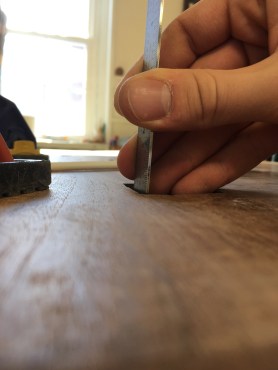
For this leg, however, I made even cuts off of all four sides of the leg — 11/32″ off each face along a 1 1/4″ length — and then did some fine chisel work to match the mortise to the tenon.

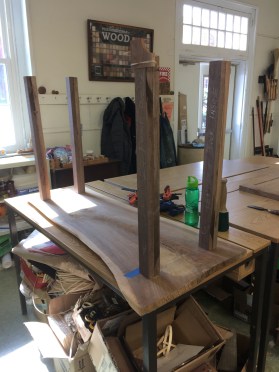
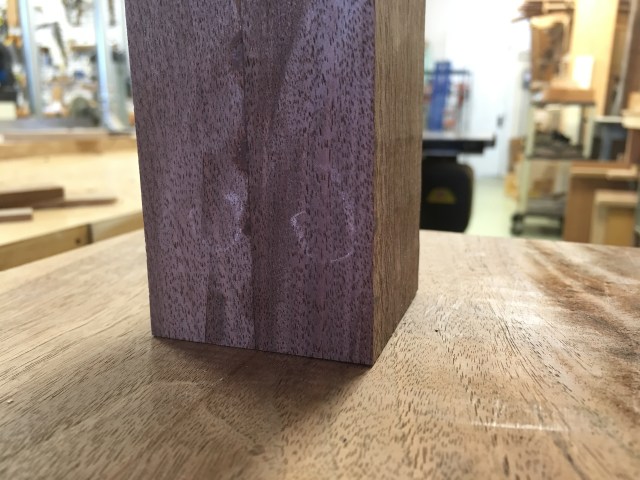
Here are the completed legs in their respective holes, along with a few other shots:

IMG_0783   IMG_0780

IMG_0786


I’m very like my mom in the shop in that when I need something that requires 100% of my focus — planning dimensions to cut a tenon, for example — it can only be us in the shop. Because we had a double period of the upper school class as well as a middle school sculpture class in here today, I had lots of time for busywork. Today, that meant planing the glue off of the shelf (which had been glued up on Tuesday), power-sanding the top surface for about an hour, and filling checks and cracks in the wood with dark-drying wood glue.

IMG_0787     IMG_0788


The next day I’ll be in the shop will probably be Saturday, and next steps will be to square up the legs, make cuts on the legs and this tray, and taper the legs themselves.

— EDM

Finally Feels Like Spring – China Day 6

Written and posted March 8th, 2018

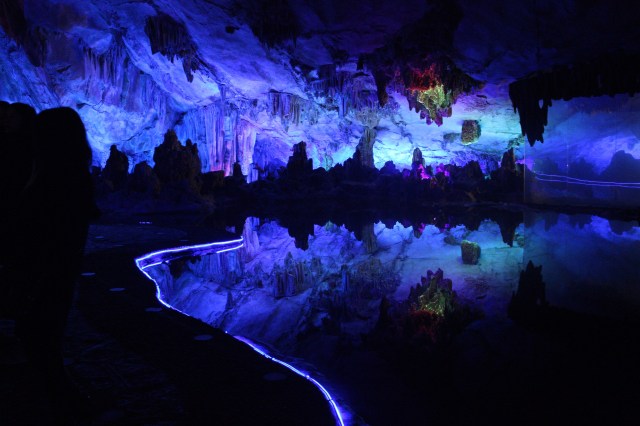
Today we took a 7 AM flight to Guilin. After arriving we visited the Reed Flute Cave. The cave was a salt cave made naturally after multiple natural events. It was really pretty especially since there were colorful lights throughout it. After the cave, we went to lunch in a hotel for rice noodles. They were good, but not as good as the noodles the other day. We then took a bus two hours to Yangshuo where we are now staying. Yangshuo is beautiful. It is in the countryside, surrounded by mountains and when we arrived it was 62°F. We then went shopping on a street called West Street where most of the prices were incredibly marked down and could be easily negotiated. Our local tour guide had a “cousin” who was selling really nice handbags. We went to the store that sold obviously fake merchandise, but then we were brought upstairs into a vault. The vault had Gucci, Chanel, Louis Vuitton, Prada and more that were NOT fake. I was in heaven, but then as I was looking at a Louis duffel bag the women took the bag off the shelf and continued to take more bags and the shelf itself off. We then entered an even more backroom with more name brand products that she was selling at amazing prices. As much as I wanted to buy something, I didn’t have enough money or a way to carry it back to the States, however, others got multiple items. While it was mainly a travel day, it was one of the best days so far!

– Anna

Knife City (Day 4)

Overview:

We started our day off by returning to Fort Apache and finishing up the work we started on the Etsy shop yesterday. However, by 11:30, we were on the road again, heading to Gallup, New Mexico. Although it was mostly a travel day, we did see some interesting sights, especially the ghost towns along Route 66. This route, which stretched from Chicago to Santa Monica,  flourished when it served as a major path for westward travel and migration. However, beginning in the 1950s, it fell into decline after being replaced by the Interstate Highway System. Today, the communities which were once made affluent by the heavy traffic along Route 66 have either fallen into disarray or been abandoned completely.


Gwyneth:

Driving through Holbrook, AZ and the surrounding area today, it was so strange to see the decrepit buildings set against the backdrop of one of the most incredible landscapes I have ever encountered. The grassy fields stretched far beyond the remnants of human life, turning into mountains and cliffs, silhouetted against a purple evening sky. My experiences on this trip so far have shown me that the earth itself contains so much spiritual power. Even in the environment of immediate dreariness which we drove through today, I recognized that it paled in comparison to the immense beauty just beyond. However, there were indications that the power of the land was often forgotten in this area. This was shown most clearly by the several large, hand painted “land for sale” signs we saw standing in open fields. At first, I didn’t give much thought to the signs beyond the fact that I had never seen land advertised so explicitly and casually. However, Ed seemed moved by the sign and stopped to photograph it. This prompted me to think more deeply about the meaning of the sign in relation to the work we have been doing on this trip. Soon enough I realized just how wrong it is to be selling land for profit. To begin with, this is not our land to sell, as it was stolen from the native people who have lived here for thousands of years. Furthermore, I have been learning and experiencing the spiritual value that the land holds in the eyes of native people. To them, and in a variety of spiritual traditions, the land is sacred and should be revered for sustaining our lives. Therefore, at least according to my own interpretation of native spirituality, it is not something that can be possessed by one person, but rather all the land is home to all humans. It is not meant to be bought or sold, but honored and cared for. This is easy to forget in the fast-paced, materialistic, profit-driven society we live in – a lifestyle embodied by Route 66. However, now that the money has gone away, nature has begun to reclaim the terrain, restoring the beauty and spiritual power of the landscape.


Maggie:

In our travels between reservations, it could feel like there was nothing around us – only our car and the highway. Just when the road seemed too long and we began wondering whether we’d ever see civilization again, another car came sputtering down the road, or we’d find a gas station or abandoned motel. These often vacant rest stops were found on the historic Route 66, parallel to the main highway, I-40. Each miniature stop had a separate theme, whether it’d be the petrified forest gift shop or, as we saw today, Knife City, a town named for its tourist knife shop. Each sign was a weather-worn relic from the 1920s – 1960s, painted onto the billboard or building itself when Route 66 was still a highly-frequented road and major tourist destination. A particularly large and rusty town we encountered was Holbrook, AZ, where most of our photos were taken. Continuing with the theme, many stores there perpetuated the cultural appropriation of Native people, despite the fact that a quarter of Holbrook is Native. It’s easy to write off these appropriative stores as outdated and artefacts of history preserved in abandoned towns, but that does not take into account why these Native gift shops are still open today. In addition to this disgusting appropriation, each town was filled with enormous, tacky, and wonderful dinosaur replicas, meant to honor the expansive dino fossils found in Arizona. Walking through the towns felt like entering an abandoned theme park whose imagery suggested that Native people and dinosaurs roamed the area at the same time.

At one photo stop, we encountered a supposedly abandoned motel, whose open doors and mattresses on the floor told a different story. Even in this vast expanse of nothingness, there are people everywhere. People live in these abandoned buildings. People shop at Native appropriation gift shops. People work at dinosaur gift shops 40 miles from all surrounding homes or communities. People live in these preserved towns of a past America.


Jane:

As we made our way from White Mountain Apache through Holbrook towards Gallup, we saw an odd mixture of beautiful and rugged landscapes that called us to explore and document them through photos. However, these impactful scenes and moments were mixed with more images that continue to perpetuate the romanticization and commercialization of natives. We stopped at the Wigwam Hotel in order to take photos. The Wigwam Hotel rooms were each individual tipis (photographed below) surrounded by old cars in the parking lot. At first, my attention went to straight to the vintage cars, and then to Maggie’s obsession over the the replica of Mater from the movie Cars, but afterwards I took a closer look at where I was. The Wigwam Hotel’s name implies that they use the traditional image of a dome home structure known as the wigwam or wikiup. The Wigwam Hotel used the typical image that is often seen in most displays of Native culture, the tipi. Tipis were not used in this part of the country but rather in the great plains and parts of Canada. It would be more accurate to use wigwams since this type of dwelling is used in this particular region. The hotel is using a traditional place of dwelling as a tourist destination. Its main attraction is the exotic experience of living as the natives did, which perpetuates the idea of us versus them. It is businesses like the Indian stores and the Wigwam Hotel that commercialize and romanticize Native Americans that are causing these negative stereotypes to impact perceptions of the modern native. As I was leaving the White Mountain Apache reservation, nothing was more apparent to me than that the modern native narrative is complex, diverse, and cannot be summed up by a tipi or a derogatory image. The modern native narrative is a product of history, past and present.